



 English
 بالعربية
 Deutsch
 Français
 Bahasa Indonesia
 Italiano
 日本語
 қазақ
 한국어
 Bahasa Malay
 Монгол
 Nederlands
 Język polski
 Português
 Русский язык
 Español
 ภาษาไทย
 Türkçe
1. Visão geral do projeto
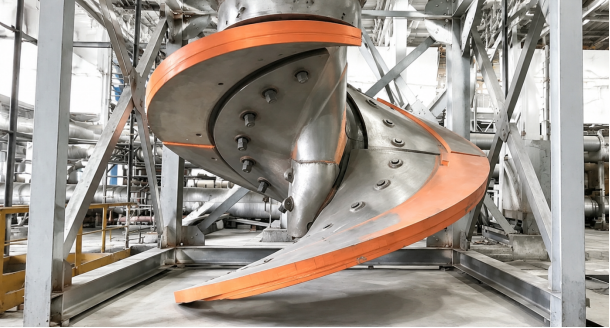
Este caso apresenta a pesquisa e o desenvolvimento de uma solução de otimização de componentes compósitos cerâmicos resistentes ao desgaste, projetada especificamente para condições operacionais altamente abrasivas de equipamentos VTM (Moinho de Torre Vertical).
Os moinhos de torre verticais VTM são amplamente utilizados na fase de moagem fina das operações de mineração. Os componentes de desgaste interno estão continuamente sujeitos à erosão da lama, ao impacto do meio de moagem e ao atrito de alta frequência durante a operação. Sob condições de produção contínua, as peças de desgaste metálicas tradicionais geralmente enfrentam desafios comuns da indústria, incluindo rápido desgaste da superfície de trabalho, rápida redução da espessura efetiva do desgaste e intervalos de manutenção reduzidos.
Para enfrentar os severos desafios de desgaste dos componentes de desgaste do moinho de torre VTM, a Haitian Heavy Industry realizou pesquisas técnicas e desenvolvimento de soluções, propondo uma estrutura física composta otimizada que consiste em uma camada protetora de cerâmica combinada com uma estrutura de suporte de base metálica.
Ao incorporar fisicamente materiais cerâmicos de alta dureza na superfície do substrato metálico resistente ao desgaste, a camada cerâmica fornece a função primária de proteção contra desgaste, enquanto a matriz metálica garante suporte estrutural e resistência ao impacto. Este projeto melhora de forma abrangente o desempenho geral de áreas críticas de desgaste e supera as limitações dos componentes convencionais resistentes ao desgaste.
2. Desafios operacionais iniciais
Com base nas características operacionais industriais de longo prazo dos moinhos de torre verticais VTM, os componentes de desgaste metálicos tradicionais enfrentam principalmente três principais limitações de desempenho:
1. O desgaste contínuo da superfície limita a vida útil
Durante a operação contínua dos moinhos de torre VTM, os materiais em pasta e os meios de moagem impactam e corroem constantemente as superfícies dos componentes de desgaste. Durante longos períodos de operação, a taxa de desgaste da superfície de trabalho continua a aumentar, enquanto a camada de desgaste efetiva diminui gradualmente.
As áreas de alta carga podem atingir o limite de substituição mais cedo do que outras seções, encurtando diretamente os ciclos de manutenção e afetando a eficiência contínua da produção.
2. Limitações de materiais metálicos únicos em condições de alto desgaste
Materiais tradicionais resistentes ao desgaste, como ferro fundido com alto teor de cromo e ligas de aço, proporcionam boa resistência estrutural e propriedades mecânicas gerais. No entanto, sob condições severas de moagem fina em aplicações de mineração, esses materiais enfrentam erosão contínua por lama e desgaste de partículas abrasivas de alta frequência.
A resistência ao desgaste de materiais monometálicos tem limitações inerentes, tornando difícil melhorar ainda mais o desempenho do serviço sob condições operacionais extremas.
3. A manutenção frequente aumenta os custos de produção e reduz a eficiência
O desgaste rápido e os ciclos curtos de substituição de peças de desgaste tradicionais resultam em maior tempo de inatividade do equipamento, períodos de manutenção mais longos e custos mais elevados para substituição de peças sobressalentes e operações de manutenção.
Esses fatores afetam indiretamente a produtividade geral e a estabilidade das operações de moagem de mineração.
3. Operating Condition Analysis and Technical Evaluation
A comprehensive analysis was conducted based on the operating characteristics and wear mechanisms of VTM tower mills.
The evaluation focused on five key aspects:
Wear distribution characteristics of equipment components
Failure modes of existing metal wear parts
Slurry erosion intensity
Impact loads from grinding media
Fundamental mechanisms of material wear
Through detailed operating condition analysis, it was confirmed that the primary failure mechanisms of VTM tower mill wear parts are abrasive wear on the surface and slurry erosion wear.
Therefore, enhancing surface wear protection capability and optimizing the wear-resistant surface structure became the key development direction for extending service life and improving equipment operating stability.
4. Technical Optimization Solution
Based on the operating challenges and technical evaluation results, Haitian Heavy Industry selected a physically embedded ceramic composite structure as the core technology route for upgrading VTM tower mill wear components.
Unlike ceramic-metal integrated casting processes, this solution adopts a layered structural design to achieve optimal performance matching between different materials.
1. Ceramic Protective Layer + Metal Matrix Composite Structure
The developed solution adopts a physically embedded composite structure, allowing different layers to perform their specific functions and achieving improvements in both wear resistance and structural stability.
Ceramic Wear-Resistant Protective Layer
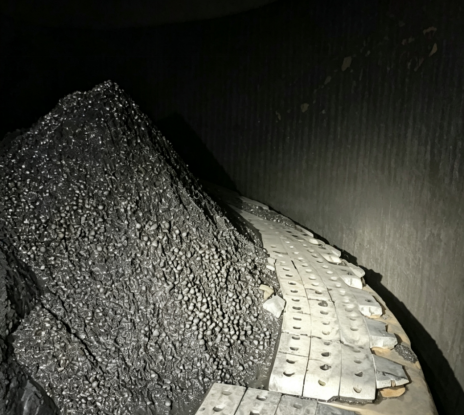
A high-hardness ceramic material with a Mohs hardness of 9 is used as the core working surface.
The ceramic layer is designed to withstand slurry erosion and abrasive particle wear, significantly reducing surface material loss and effectively improving the rapid wear problem of traditional components.
Metal Support Matrix
The traditional metal base structure is retained to provide overall mechanical support and impact resistance.
The metal matrix ensures installation accuracy and operational stability, avoiding the brittleness and fracture risks commonly associated with pure ceramic structures.
This optimized design does not require major changes to the original component structure. By embedding high-performance ceramic materials into the critical wear surface, the wear performance can be upgraded accurately with higher adaptability and stronger implementation feasibility.
2. Targeted Reinforcement of Critical Wear Areas
According to the different wear intensity distributions inside the VTM tower mill, differentiated reinforcement designs are applied.
High-wear areas are specifically reinforced with ceramic protection layers. The arrangement and coverage of ceramic modules are optimized to improve utilization efficiency of the effective wear protection area, avoid unnecessary material usage, and eliminate weak protection zones.
This enables a more precise and efficient wear-resistant structure design.
5. Performance Design Targets and Expected Results
Based on structural optimization design, material performance testing data, and operating condition simulation analysis, the expected improvements of the ceramic composite wear-resistant solution are shown below:
| Optimization Dimension | Traditional Solution | Optimized Design (Prediction) | Key Improvement |
|---|---|---|---|
| Wear Dimension | 850 mm | 720 mm | Wear reduction of approximately 15.3% |
| Wear Protection Method | Single metal wear-resistant layer | Ceramic protective layer + metal matrix composite structure | Significantly improved resistance against slurry erosion and abrasive wear |
| Target Operating Time | Conventional operating cycle | Expected to reach 9,000 hours | Extended maintenance intervals |
| Core Optimization Direction | Basic wear protection | Reduced wear, stable operation, lower maintenance frequency | Reduced wear rate and improved equipment reliability |
Overall, this ceramic composite wear-resistant solution is expected to effectively reduce the wear rate of key VTM tower mill components, extend replacement intervals, reduce unplanned downtime, and provide technical support for cost reduction and efficiency improvement in mining operations.
6. Manufacturing Process Assurance
During the research and trial production process of the ceramic composite wear components, Haitian Heavy Industry focused on key manufacturing control points to ensure product quality and performance stability.
Four major areas were strictly controlled:
Ceramic embedding and assembly accuracy
Bonding stability between ceramic and metal matrix
Overall dimensional consistency
Raw material and finished product performance inspection
Relying on mature casting technology and advanced 3D sand printing technology, Haitian Heavy Industry can efficiently complete the development, structural optimization, and performance improvement of complex wear components.
This ensures high design accuracy and the feasibility of future mass production.
7. Solution Value and Application Areas
The VTM tower mill ceramic composite wear component upgrade solution is mainly applicable to:
Copper ore beneficiation
Gold ore fine grinding
Iron ore processing
Various highly abrasive mineral processing applications
The core value of this technology focuses on four optimization objectives:
Effectively reducing wear rates in critical equipment areas
Significantly extending wear part replacement cycles
Reducing unplanned equipment downtime
Continuously lowering operating and maintenance costs in mining grinding processes
This technology provides a new solution for upgrading tower mill wear components under severe abrasive conditions.
8. Key Engineering Experience Summary
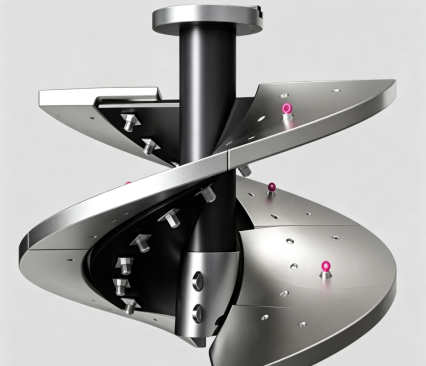
The performance upgrade of VTM tower mill wear components is not simply achieved by increasing material hardness.
It requires a systematic engineering approach integrating:
Wear mechanism analysis
Material performance matching
Structural optimization design
Manufacturing process control
Real operating condition adaptation
Through ceramic protective layer composite technology and refined wear structure optimization, this solution overcomes the performance limitations of traditional metal wear parts and establishes a technical foundation for future upgrades and application optimization of high-performance VTM tower mill wear components.
Haitian Heavy Industry will continue focusing on material improvement and structural innovation, continuously advancing wear-resistant technology to support the mining industry in achieving longer equipment operating cycles, higher production stability, and lower maintenance costs.

 Marque Falar


