



 English
 بالعربية
 Deutsch
 Français
 Bahasa Indonesia
 Italiano
 日本語
日本語 қазақ
қазақ 한국어
한국어 Bahasa Malay
 Монгол
 Nederlands
 Język polski
 Português
 Русский язык
 Español
 ภาษาไทย
 Türkçe
In the mining industry, wear parts operate under extreme impact and abrasive conditions, directly affecting equipment efficiency and operational costs. By combining steel quality control, material upgrade, advanced process innovation, and structural optimization, we provide a systematic solution to enhance product performance and service life
1. Molten Steel Quality Control: Pre-Casting Bending Test
Steel quality is the foundation for high-performance wear parts.
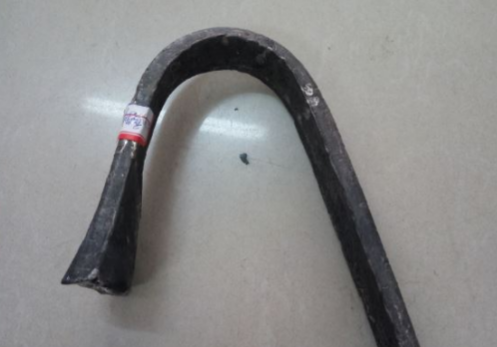
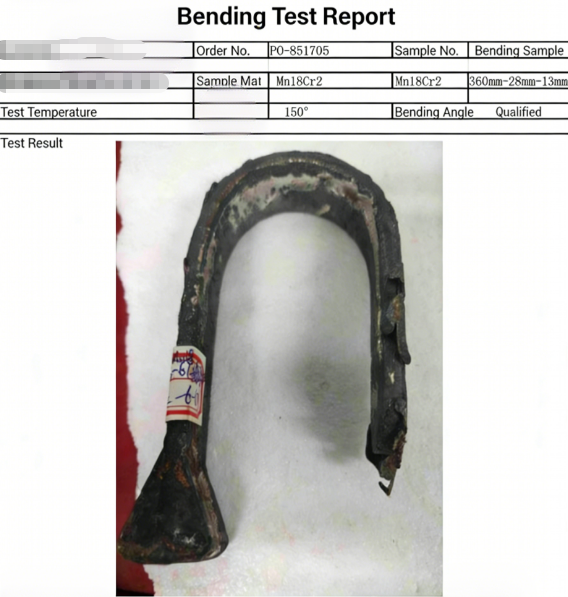
For this project, Mn18Cr2 high manganese steel samples underwent a 150° bending test at room temperature prior to casting. All specimens passed without cracks or defects (as shown in the test image).
Technical Significance
The bending test verifies:
* Internal purity of the molten steel (absence of inclusions or pores)
* Material ductility and toughness
* Stability of the smelting process
Quality Assurance Result
Only steel passing the bending test proceeds to casting, ensuring:
* Consistent Mn18Cr2 chemical composition
* High steel purity
* Excellent impact resistance and reliability
2. TiC Reinforcement Technology: Achieving Abrasion Resistance Leap
On top of traditional high manganese steel, we developed an in-house Titanium Carbide (TiC) reinforcement process, significantly enhancing wear part performance.
Process Principle
* TiC particles are embedded in the Mn18Cr2 matrix
* Forms a composite structure: ductile metal matrix + ultra-hard ceramic phase
Performance Advantages
* Significantly improved wear resistance
* Enhanced impact-abrasion performance
* Slower material degradation
* Extended service life
Metallographic & Microstructural Verification
* Uniform TiC particle distribution
* Strong metallurgical bonding with the matrix
* Stable and reliable microstructure for real working conditions
3. Data-Driven Validation: Material & Process Performance
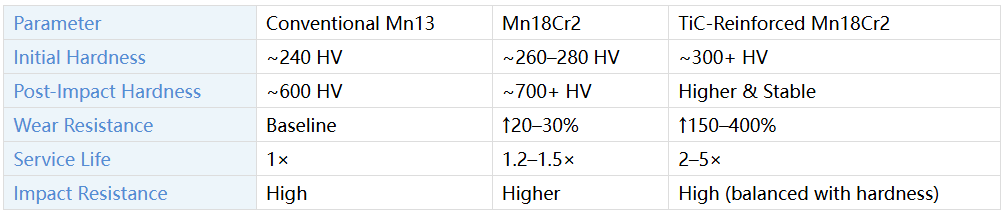
We compared conventional high manganese steel, Mn18Cr2, and TiC-reinforced Mn18Cr2 based on experimental data and industry research:
Material Performance Enhancement
-Mn18Cr2 vs Mn13 steel:
Stronger work-hardening capability
Surface hardness after impact: 700+ HV (Mn13: ~600 HV)
Balance of high hardness and toughness
TiC Reinforced Material
TiC particle hardness: >3× base steel
Wear resistance improvement:
Laboratory: ~2.5×
Field conditions: 3–5×
Comprehensive Comparison Table
Economic Impact:
Reduced replacement frequency
Decreased downtime
Lower maintenance cost
Total Cost of Ownership (TCO) reduction: ~30%+
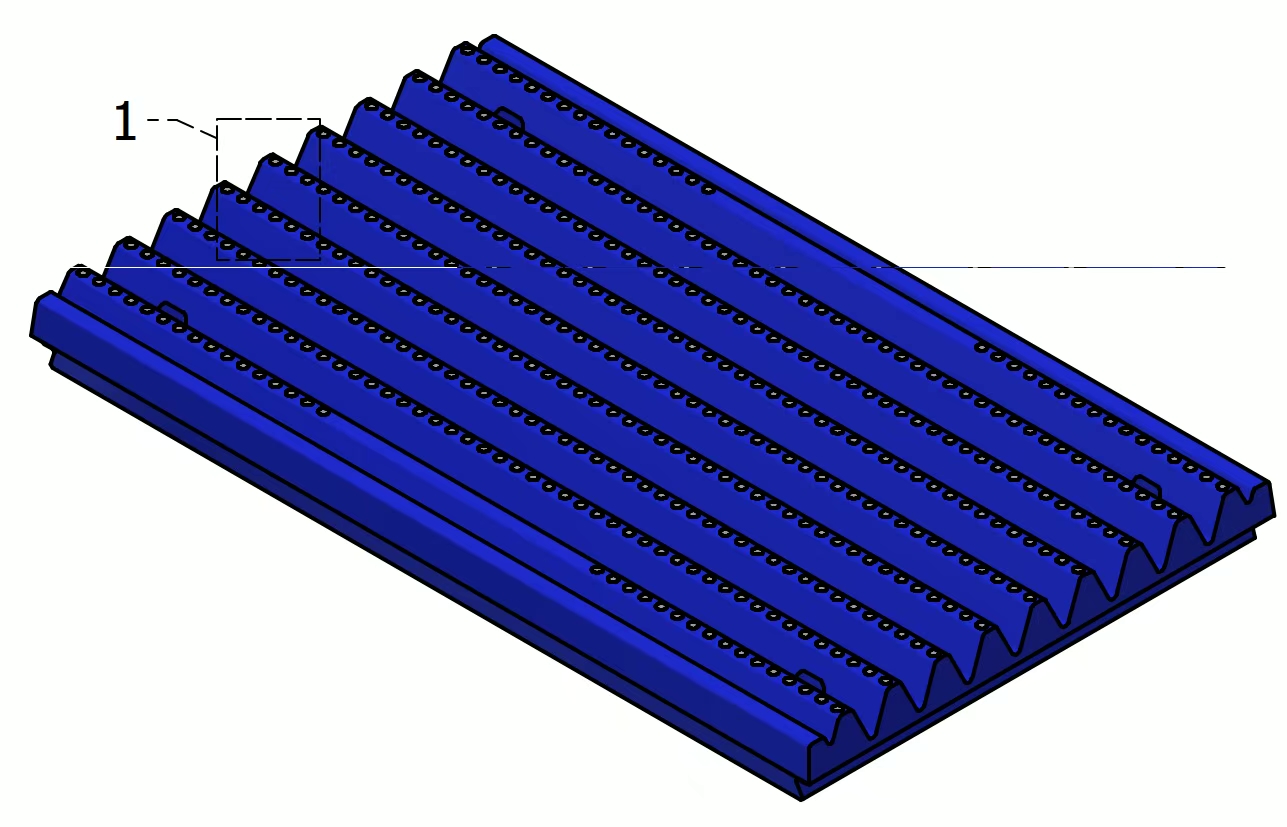
4. Structural Optimization: Jaw Plate Design Improvement
Beyond material innovation, structural design is crucial for performance.
Customer Challenge
Original jaw plate design: 10-inch flattened teeth at both ends
Reduced effective crushing area, lowering efficiency
Customer request:
👉 Restore full corrugated teeth across the surface
Our Solution
Redesigned tooth profile
Restored continuous corrugated structure
Optimized force distribution and assembly compatibility
Optimization Benefits
Increased effective crushing area
Improved material grip and crushing efficiency
More uniform wear distribution
Enhanced assembly stability
5. Metallographic Analysis: Microstructure Verification
We conducted systematic metallographic analysis to validate material reliability and explain performance improvements:
1. Mn18Cr2 Matrix
Typical austenitic matrix
Uniform grain size, minimal segregation
Dense microstructure with low impurity content
Conclusion: High steel purity and excellent toughness, consistent with bending test results.
2. TiC Reinforced Composite
Dark particles represent TiC phase
Evenly dispersed throughout the matrix
No agglomeration or segregation
Key Observations:
Controlled particle size and uniform distribution
Strong metallurgical bonding, no delamination risk
Stable microstructure ensures reliability under extreme conditions
3. Wear Mechanism
Austenitic matrix absorbs impact energy
TiC particles resist abrasive wear
Forms a synergistic impact-abrasion mechanism
4. Post-Wear Analysis
Conventional Mn18Cr2: deeper wear grooves, more plastic deformation
TiC-reinforced Mn18Cr2: more uniform wear, reduced groove depth, TiC particles block wear propagation
Recommended Display:
Figure 1: Mn18Cr2 matrix microstructure
Figure 2: TiC particle distribution
Figure 3: Interface bonding micrograph
Figure 4: Before/after wear comparison
Conclusion
This case demonstrates our comprehensive capability in mining wear parts:
✔ Steel quality control (bending test)
✔ Material upgrade (Mn18Cr2 high-performance alloy)
✔ Process innovation (TiC reinforcement)
✔ Engineering optimization (jaw plate design)
We provide not only products but quantifiable performance improvement and cost-saving solutions, enabling customers to achieve:
Longer service life / Higher production efficiency / Lower operational cost
📩 Call to Action
For customized, high-performance mining wear parts solutions and technical support, contact us today.

 Tik Tok


