


 English
 بالعربية
 Deutsch
 Français
 Bahasa Indonesia
 Italiano
 日本語
日本語 қазақ
қазақ 한국어
한국어 Bahasa Malay
 Монгол
 Nederlands
 Język polski
 Português
 Русский язык
 Español
 ภาษาไทย
 Türkçe
1. Project Overview
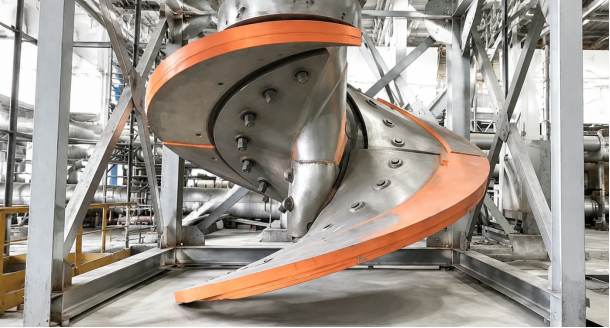
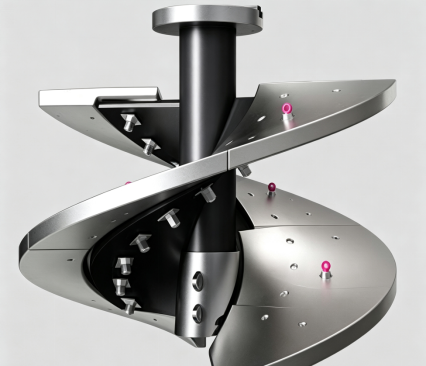
This case presents the research and development of a ceramic composite wear-resistant component optimization solution specifically designed for the highly abrasive operating conditions of VTM (Vertical Tower Mill) equipment.
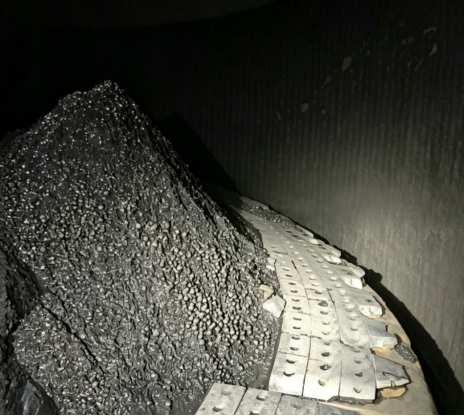
VTM vertical tower mills are widely used in the fine grinding stage of mining operations. The internal wear components are continuously subjected to slurry erosion, grinding media impact, and high-frequency friction during operation. Under continuous production conditions, traditional metal wear parts generally face common industry challenges, including rapid working surface wear, fast reduction of effective wear thickness, and shortened maintenance intervals.
To address the severe wear challenges of VTM tower mill wear components, Haitian Heavy Industry has carried out technical research and solution development, proposing an optimized physical composite structure consisting of a ceramic protective layer combined with a metal base support structure.
By physically embedding high-hardness ceramic materials onto the surface of the metal wear-resistant substrate, the ceramic layer provides the primary wear protection function, while the metal matrix ensures structural support and impact resistance. This design comprehensively improves the overall performance of critical wear areas and overcomes the limitations of conventional wear-resistant components.
2. Initial Operating Challenges
Based on the long-term industrial operating characteristics of VTM vertical tower mills, traditional metal wear components mainly face three major performance limitations:
1. Continuous Surface Wear Limits Service Life
During continuous operation of VTM tower mills, slurry materials and grinding media constantly impact and erode the wear component surfaces. Over extended operating periods, the wear rate of the working surface continues to increase, while the effective wear layer gradually decreases.
High-load areas may reach the replacement limit earlier than other sections, directly shortening maintenance cycles and affecting continuous production efficiency.
2. Limitations of Single Metal Materials in High-Wear Conditions
Traditional wear-resistant materials such as high chromium cast iron and alloy steel provide good structural strength and overall mechanical properties. However, under harsh fine-grinding conditions in mining applications, these materials face continuous slurry erosion and high-frequency abrasive particle wear.
The wear resistance of single-metal materials has inherent limitations, making it difficult to further improve service performance under extreme operating conditions.
3. Frequent Maintenance Increases Production Costs and Reduces Efficiency
Rapid wear and short replacement cycles of traditional wear parts result in increased equipment downtime, longer maintenance periods, and higher costs for spare parts replacement and maintenance operations.
These factors indirectly affect the overall productivity and stability of mining grinding operations.
3. Operating Condition Analysis and Technical Evaluation
A comprehensive analysis was conducted based on the operating characteristics and wear mechanisms of VTM tower mills.
The evaluation focused on five key aspects:
Wear distribution characteristics of equipment components
Failure modes of existing metal wear parts
Slurry erosion intensity
Impact loads from grinding media
Fundamental mechanisms of material wear
Through detailed operating condition analysis, it was confirmed that the primary failure mechanisms of VTM tower mill wear parts are abrasive wear on the surface and slurry erosion wear.
Therefore, enhancing surface wear protection capability and optimizing the wear-resistant surface structure became the key development direction for extending service life and improving equipment operating stability.
4. Technical Optimization Solution
Based on the operating challenges and technical evaluation results, Haitian Heavy Industry selected a physically embedded ceramic composite structure as the core technology route for upgrading VTM tower mill wear components.
Unlike ceramic-metal integrated casting processes, this solution adopts a layered structural design to achieve optimal performance matching between different materials.
1. Ceramic Protective Layer + Metal Matrix Composite Structure
The developed solution adopts a physically embedded composite structure, allowing different layers to perform their specific functions and achieving improvements in both wear resistance and structural stability.
Ceramic Wear-Resistant Protective Layer
A high-hardness ceramic material with a Mohs hardness of 9 is used as the core working surface.
The ceramic layer is designed to withstand slurry erosion and abrasive particle wear, significantly reducing surface material loss and effectively improving the rapid wear problem of traditional components.
Metal Support Matrix
The traditional metal base structure is retained to provide overall mechanical support and impact resistance.
The metal matrix ensures installation accuracy and operational stability, avoiding the brittleness and fracture risks commonly associated with pure ceramic structures.
This optimized design does not require major changes to the original component structure. By embedding high-performance ceramic materials into the critical wear surface, the wear performance can be upgraded accurately with higher adaptability and stronger implementation feasibility.
2. Targeted Reinforcement of Critical Wear Areas
According to the different wear intensity distributions inside the VTM tower mill, differentiated reinforcement designs are applied.
High-wear areas are specifically reinforced with ceramic protection layers. The arrangement and coverage of ceramic modules are optimized to improve utilization efficiency of the effective wear protection area, avoid unnecessary material usage, and eliminate weak protection zones.
This enables a more precise and efficient wear-resistant structure design.
5. Performance Design Targets and Expected Results
Based on structural optimization design, material performance testing data, and operating condition simulation analysis, the expected improvements of the ceramic composite wear-resistant solution are shown below:
| Optimization Dimension | Traditional Solution | Optimized Design (Prediction) | Key Improvement |
|---|---|---|---|
| Wear Dimension | 850 mm | 720 mm | Wear reduction of approximately 15.3% |
| Wear Protection Method | Single metal wear-resistant layer | Ceramic protective layer + metal matrix composite structure | Significantly improved resistance against slurry erosion and abrasive wear |
| Target Operating Time | Conventional operating cycle | Expected to reach 9,000 hours | Extended maintenance intervals |
| Core Optimization Direction | Basic wear protection | Reduced wear, stable operation, lower maintenance frequency | Reduced wear rate and improved equipment reliability |
Overall, this ceramic composite wear-resistant solution is expected to effectively reduce the wear rate of key VTM tower mill components, extend replacement intervals, reduce unplanned downtime, and provide technical support for cost reduction and efficiency improvement in mining operations.
6. Manufacturing Process Assurance
During the research and trial production process of the ceramic composite wear components, Haitian Heavy Industry focused on key manufacturing control points to ensure product quality and performance stability.
Four major areas were strictly controlled:
Ceramic embedding and assembly accuracy
Bonding stability between ceramic and metal matrix
Overall dimensional consistency
Raw material and finished product performance inspection
Relying on mature casting technology and advanced 3D sand printing technology, Haitian Heavy Industry can efficiently complete the development, structural optimization, and performance improvement of complex wear components.
This ensures high design accuracy and the feasibility of future mass production.
7. Solution Value and Application Areas
The VTM tower mill ceramic composite wear component upgrade solution is mainly applicable to:
Copper ore beneficiation
Gold ore fine grinding
Iron ore processing
Various highly abrasive mineral processing applications
The core value of this technology focuses on four optimization objectives:
Effectively reducing wear rates in critical equipment areas
Significantly extending wear part replacement cycles
Reducing unplanned equipment downtime
Continuously lowering operating and maintenance costs in mining grinding processes
This technology provides a new solution for upgrading tower mill wear components under severe abrasive conditions.
8. Key Engineering Experience Summary
The performance upgrade of VTM tower mill wear components is not simply achieved by increasing material hardness.
It requires a systematic engineering approach integrating:
Wear mechanism analysis
Material performance matching
Structural optimization design
Manufacturing process control
Real operating condition adaptation
Through ceramic protective layer composite technology and refined wear structure optimization, this solution overcomes the performance limitations of traditional metal wear parts and establishes a technical foundation for future upgrades and application optimization of high-performance VTM tower mill wear components.
Haitian Heavy Industry will continue focusing on material improvement and structural innovation, continuously advancing wear-resistant technology to support the mining industry in achieving longer equipment operating cycles, higher production stability, and lower maintenance costs.

 Tik Tok


