



 English
 بالعربية
 Deutsch
 Français
 Bahasa Indonesia
 Italiano
 日本語
日本語 қазақ
қазақ 한국어
한국어 Bahasa Malay
 Монгол
 Nederlands
 Język polski
 Português
 Русский язык
 Español
 ภาษาไทย
 Türkçe
When selecting wear parts for concrete equipment, mining machinery, or asphalt plants, casting process plays a critical role in determining product quality, service life, and long-term operating cost. Among the most common methods, DISA automated molding lines and manual (hand-molded) casting represent two very different manufacturing philosophies.
This article explains the key differences between DISA line casting and manual casting — and how they impact the performance of wear-resistant parts.
1. What Is DISA Line Casting?
A DISA line is a highly automated vertical molding system widely used in modern foundries. It integrates sand molding, pouring, cooling, shakeout, and process control into a continuous production line.
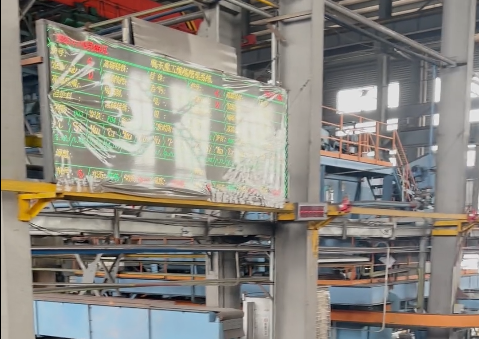
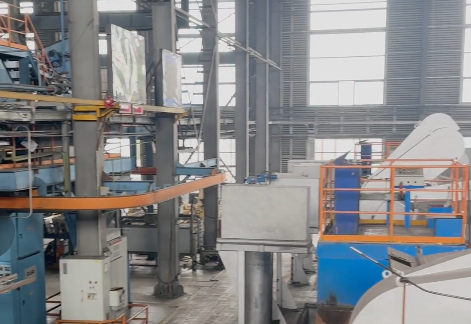
Key Characteristics of DISA Casting:
Automated vertical molding
High molding accuracy and consistency
Controlled pouring parameters
Stable batch-to-batch quality
Suitable for medium to large volume production
DISA lines are commonly applied to wear parts that require tight dimensional tolerances, consistent microstructure, and repeatable performance.
2. What Is Manual Casting?
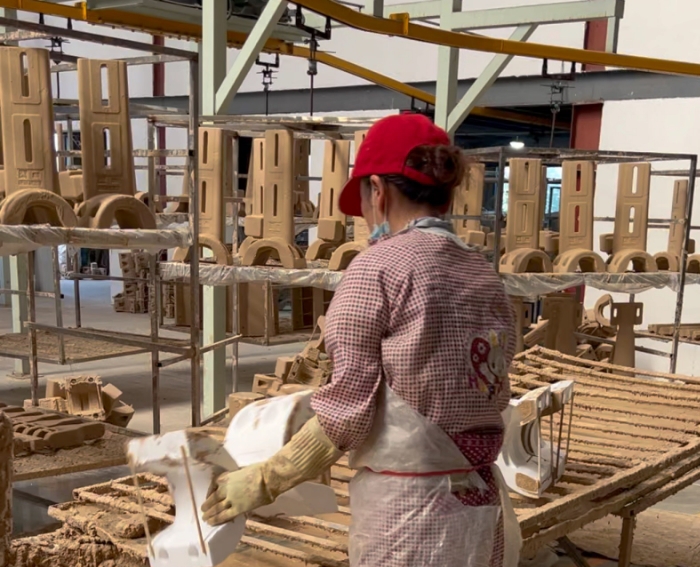
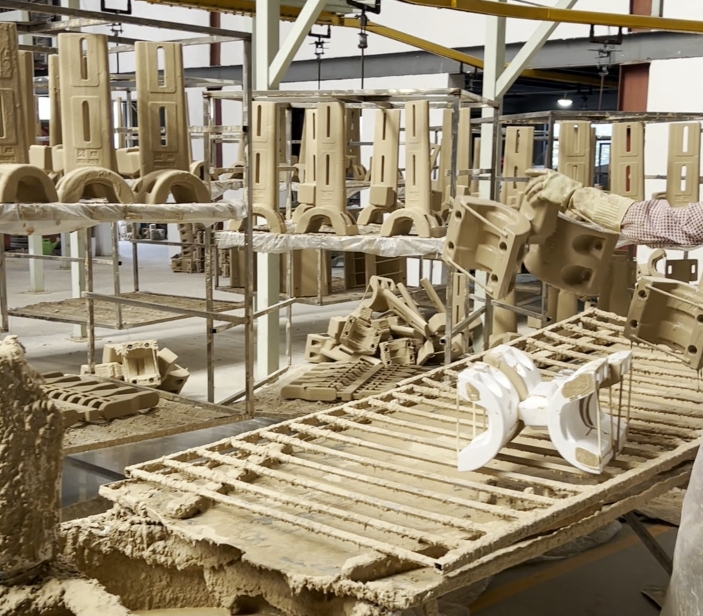
Manual casting relies on hand-prepared sand molds, manual pouring, and operator experience. It is a traditional and flexible process, often used for low-volume or oversized castings.
Key Characteristics of Manual Casting:
High flexibility for complex or large parts
Lower tooling investment
Strong dependence on operator skill
Greater variability between batches
While manual casting remains relevant in specific applications, it introduces more uncertainty for high-wear, high-demand components.
3. Dimensional Accuracy and Consistency
One of the most significant differences lies in dimensional control.
DISA Line Casting:
Precise mold alignment
Minimal dimensional deviation
Excellent repeatability for mass production
Manual Casting:
Greater dimensional tolerance variation
Higher risk of mismatch and deformation
More post-machining required
For wear parts such as mixer liners, blades, and crusher components, dimensional accuracy directly affects fitment, load distribution, and wear uniformity.
4. Internal Quality and Microstructure
Wear resistance is not only about material grade but also about internal soundness.
DISA Line Casting:
Uniform sand compaction
Controlled pouring speed and temperature
Reduced risk of porosity and inclusions
Manual Casting:
Variable sand density
Higher risk of gas defects and shrinkage
Less consistent microstructure
Stable internal quality ensures predictable wear behavior and longer service life in abrasive environments.
5. Process Stability and Quality Control
DISA systems allow for process data tracking, including molding pressure, pouring temperature, and cycle time.
DISA Line: Statistical process control (SPC), traceability, and repeatability
Manual Casting: Visual inspection and experience-based adjustments
For global OEMs and large-scale projects, process stability is often a mandatory requirement.
6. Production Efficiency and Lead Time
DISA Line Casting:
High production efficiency
Shorter and more predictable lead times
Ideal for long-term supply contracts
Manual Casting:
Lower output per shift
Longer and less predictable delivery cycles
For customers managing equipment uptime and spare part inventory, delivery reliability is a key factor.
7. Cost Considerations: Short-Term vs Long-Term
At first glance, manual casting may appear more cost-effective due to lower tooling costs. However, lifecycle economics tell a different story.
DISA Line: Higher initial investment, lower unit variation, reduced failure risk
Manual Casting: Lower setup cost, higher variability, increased replacement frequency
For high-wear parts, total cost of ownership (TCO) often favors DISA-produced components.
8. Which Casting Process Is Right for Wear Parts?
| Application Requirement | Recommended Process |
|---|---|
| High-volume wear parts | DISA Line Casting |
| Tight dimensional tolerance | DISA Line Casting |
| Long service life focus | DISA Line Casting |
| Low-volume or oversized parts | Manual Casting |
| Rapid prototyping | Manual Casting |
9. Conclusion: Process Determines Performance
The casting process is a critical factor behind the reliability of wear parts. While manual casting offers flexibility, DISA automated lines provide superior consistency, internal quality, and lifecycle performance.
For equipment operating under high abrasion and high load conditions, choosing the right casting process can significantly reduce downtime, maintenance frequency, and operating cost.
Haitian Heavy Industry applies advanced DISA line technology to deliver stable, high-performance wear solutions for concrete equipment, mining, and asphalt applications worldwide.
Looking to optimize wear life and reduce operating cost? Contact our engineering team for tailored wear solutions.

 Tik Tok


