



 English
 بالعربية
 Deutsch
 Français
 Bahasa Indonesia
 Italiano
 日本語
日本語 қазақ
қазақ 한국어
한국어 Bahasa Malay
 Монгол
 Nederlands
 Język polski
 Português
 Русский язык
 Español
 ภาษาไทย
 Türkçe
The Real Key Factors in High-Chromium Wear Materials (Haitian Heavy Industry Insight)
In mining, crushing, and heavy engineering applications, customers often assume a common idea:
“The higher the Mo (molybdenum) content, the lower the risk of cracking in wear parts.”
However, based on real production experience and field performance data from Haitian Heavy Industry, this assumption is not technically accurate.
The cracking resistance of wear parts is not determined by a single element such as Mo, but by the overall material system design.
1. The Real Root Causes of Wear Part Cracking
For high-impact components such as crusher hammer tips, blow bars, and liners, cracking is mainly influenced by the following factors:
1) Carbon Content Control (The Most Critical Factor)
Carbon content is the foundation of the strength–toughness balance in high-chromium materials.
It directly affects:
· Impact resistance
· Hardness level
· Structural toughness stability
Improper carbon ratio leads to brittle or unstable performance regardless of Mo content.
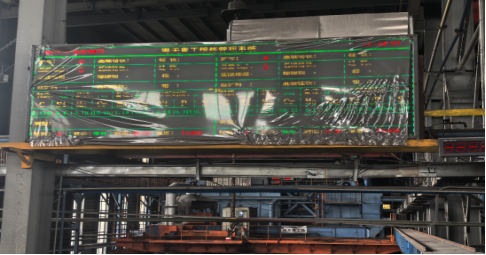
2) Molten Iron Purity
Non-metallic inclusions such as:
· Sulfur (S)
· Phosphorus (P)
· Oxides
can significantly reduce impact resistance and initiate crack propagation.
3) Internal Density (Casting Integrity)
Casting defects such as:
· Porosity
· Shrinkage cavities
are direct failure origins under high stress conditions.
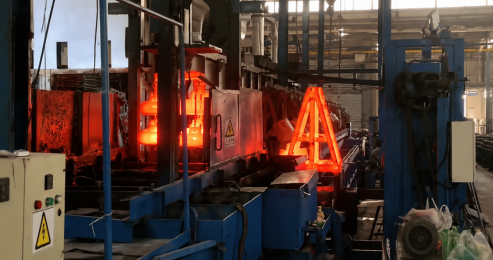
4) Heat Treatment Process (Key for Stability)
Heat treatment determines the final microstructure of the material.
Critical parameters include:
· Austenitizing temperature
· Holding time
· Quenching medium
· Tempering control
Poor heat treatment leads to uneven hardness and residual stress concentration.
5) The Real Function of Mo (Molybdenum)
Mo is NOT a “anti-cracking element.”
Its real functions are:
· Improving hardenability
· Reducing hardness gradient between surface and core
· Enhancing microstructure uniformity
· Extending wear resistance life
However:
Mo cannot fundamentally solve cracking issues. It only improves structural consistency.
Conclusion
From a metallurgical engineering perspective:
Wear part performance is determined by a system, not a single alloy element.
Key factors include:
· Carbon control
· Melt purity
· Casting density
· Heat treatment stability
Mo is only an auxiliary optimization element.

 Tik Tok


