



 English
 بالعربية
 Deutsch
 Français
 Bahasa Indonesia
 Italiano
 日本語
日本語 қазақ
қазақ 한국어
한국어 Bahasa Malay
 Монгол
 Nederlands
 Język polski
 Português
 Русский язык
 Español
 ภาษาไทย
 Türkçe
In sintering, metallurgy, and mineral processing industries, grate bars are critical wear-resistant components used in sintering machines. Operating under extreme conditions, grate bars are continuously exposed to high temperatures, heavy impact, thermal cycling, and abrasive wear caused by sintered materials.
The performance of grate bars directly affects equipment stability, production efficiency, and maintenance costs. Low-quality grate bars may suffer from accelerated wear, cracking, deformation, or premature failure, resulting in unexpected downtime, frequent replacement, and increased operating expenses.
Haitian Casting specializes in the development and manufacturing of wear-resistant castings. With advanced automatic casting equipment, professional material development capabilities, and a comprehensive quality control system, Haitian provides high-performance grate bar solutions for global mining, metallurgy, and industrial customers.
Recently, after conducting an on-site factory inspection, a South African customer recognized Haitian’s manufacturing capability, automated production equipment, and quality management system. The customer placed an order for 150 tons of grate bars, totaling 50,000 pieces.
To meet the large-volume production demand, Haitian completed the manufacturing and delivery within only 40 days, demonstrating strong capabilities in large-scale wear casting production, rapid response, and stable supply.
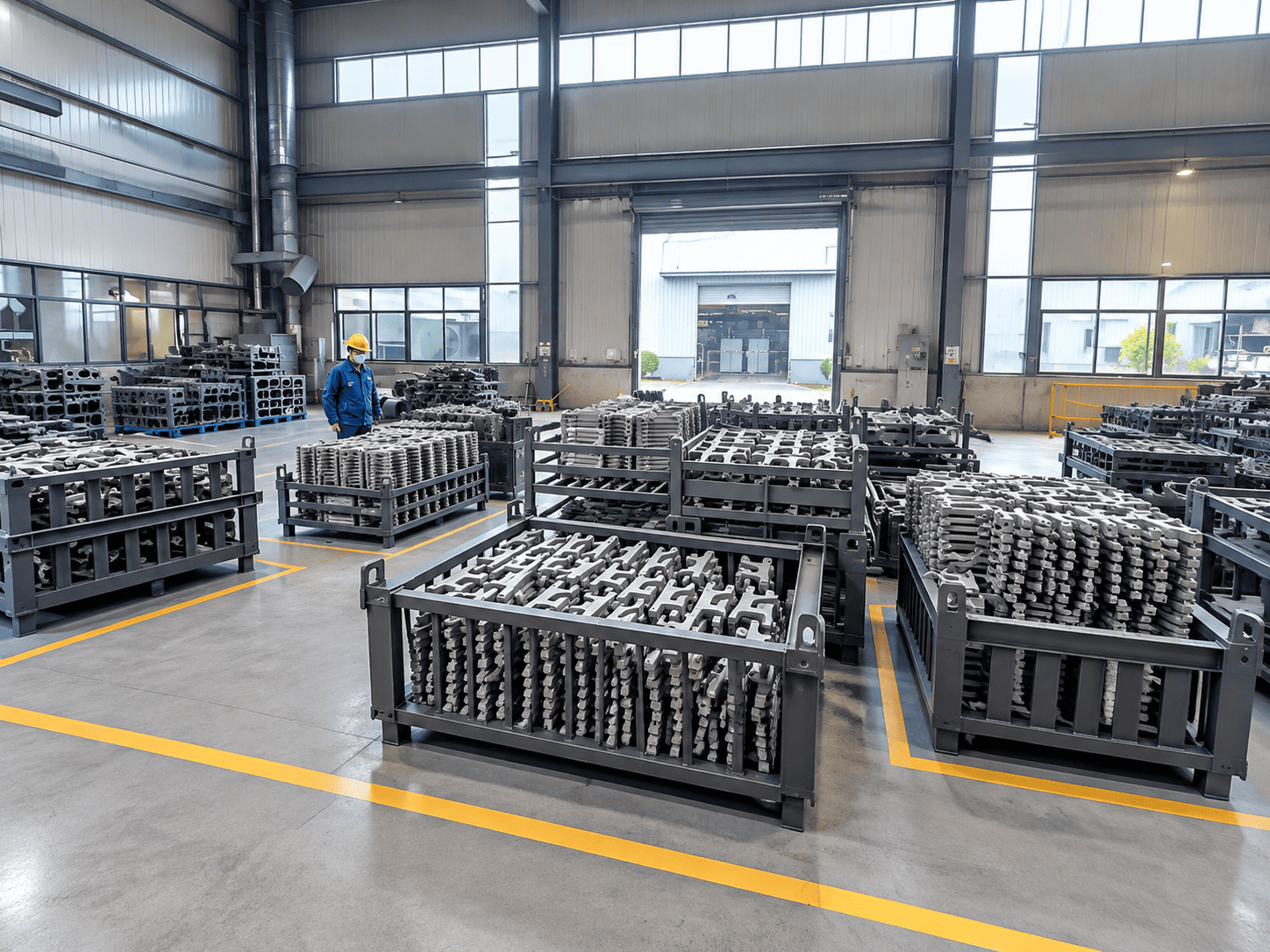
150 Tons and 50,000 Pieces: Large-Scale Manufacturing Capability Behind the Order
For sintering plants, grate bars are installed in large quantities throughout the sintering machine system. Therefore, suppliers must provide not only high-performance products but also reliable mass production capacity.
The South African customer order included:
· Product: Grate Bars
· Total Weight: 150 tons
· Quantity: 50,000 pieces
· Production Period: 40 days from manufacturing to delivery
Such a large-scale order requires strong production equipment, efficient process management, strict quality control, and effective supply chain coordination.
Haitian Casting utilizes standardized production processes and automated manufacturing systems to coordinate the entire production cycle, including raw material preparation, casting, post-processing, and final inspection. This ensures consistent product quality throughout the 50,000-piece batch within a short delivery period.
DISA Automatic Casting Line Improves Production Efficiency and Product Consistency
Grate bars are typical high-volume wear castings, where production consistency becomes increasingly important as order quantities increase.
Haitian Casting uses DISA automatic casting lines for grate bar production. Through automated molding, precise pattern control, and stable pouring processes, the production efficiency is significantly improved while reducing variations caused by manual operations.
Compared with traditional manual molding methods, DISA automatic casting technology provides several advantages:
· Higher production efficiency to support large-volume orders and shorter delivery cycles;
· More stable dimensional accuracy to improve installation compatibility;
· Better batch-to-batch consistency to reduce performance variation;
· Higher production stability for continuous large-scale manufacturing.
For the 50,000-piece grate bar order, automated production capability was a key factor in achieving the 40-day delivery schedule.
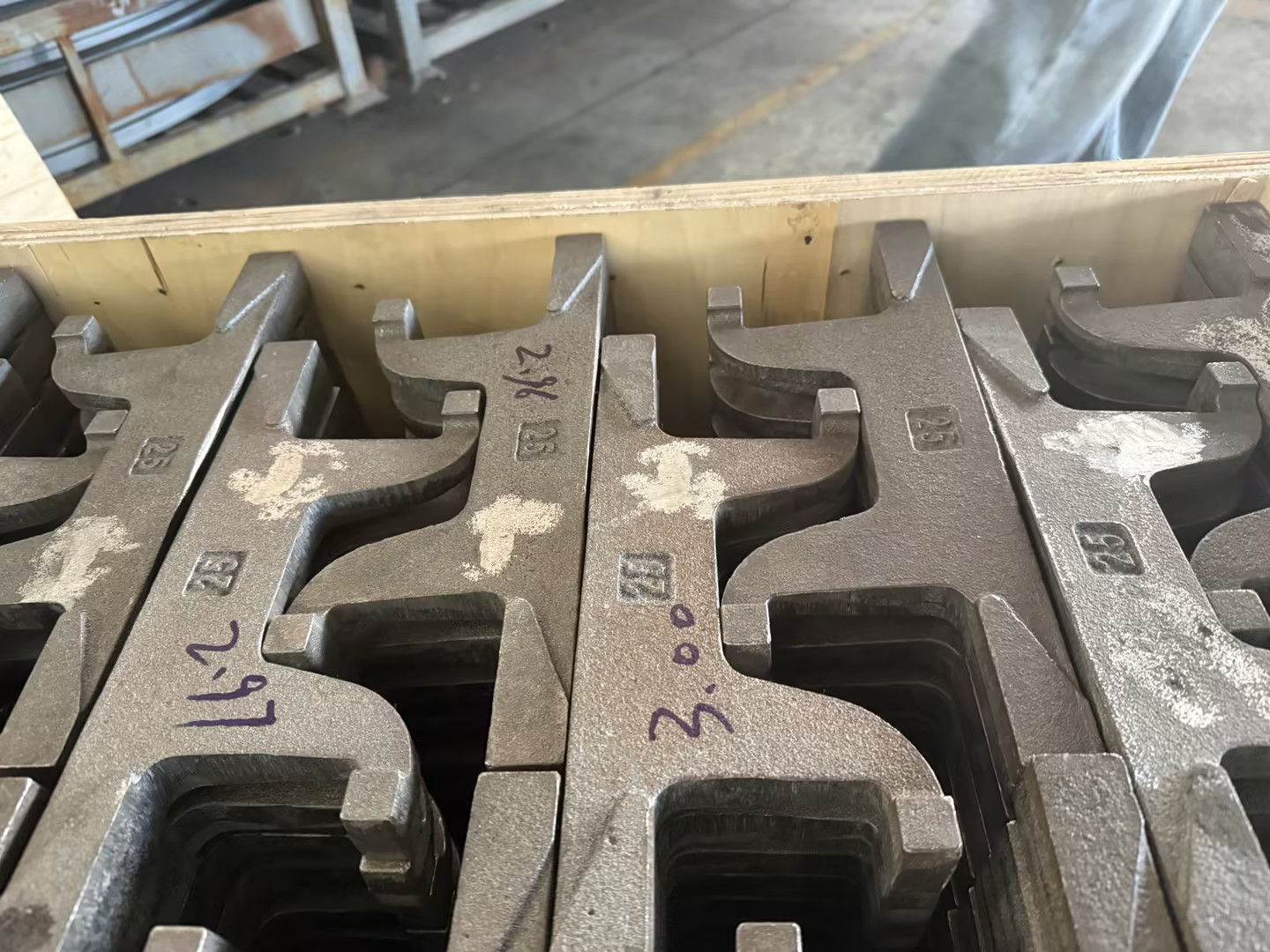
Wear and Heat-Resistant Material System Improves Grate Bar Service Life
Grate bars operate in high-temperature sintering environments and must withstand continuous impact from sintered materials, thermal cycling, and abrasive wear. Therefore, material performance is one of the most important factors determining service life.
Based on sintering machine operating conditions, Haitian Casting optimizes the grate bar material system by adjusting alloy composition and improving internal metallurgical structure to enhance overall performance.
During material development, Haitian focuses on three key performance areas:
Wear Resistance
By optimizing alloy composition, the material achieves stronger resistance against abrasive wear and material erosion, reducing dimensional loss during long-term operation.
Impact Resistance
During operation, grate bars are repeatedly impacted by sintered materials. The material must maintain sufficient toughness to prevent cracking, breakage, and premature failure.
Thermal Fatigue Resistance
Long-term exposure to high-temperature cycles generates thermal stress inside the material. Advanced material design helps improve stability under repeated heating and cooling conditions.
Through the combined optimization of wear resistance, heat resistance, and impact performance, Haitian grate bars are designed to meet the requirements of continuous sintering production.
Precision Casting and Heat Treatment Technology Enhance Overall Performance
The final performance of grate bars depends not only on material selection but also on casting technology and heat treatment processes.
Haitian Casting optimizes mold design, pouring parameters, and cooling processes to improve internal structure uniformity and reduce casting defects.
Meanwhile, controlled heat treatment processes adjust the material structure, helping achieve a better balance between hardness and toughness.
Proper heat treatment provides several benefits:
· Improves stability of wear-resistant areas;
· Optimizes internal metallurgical structure;
· Reduces the risk of cracking during operation;
· Extends product service life.
The combination of material development, precision casting, and heat treatment technology enables grate bars to deliver strong wear resistance while maintaining the structural stability required for long-term operation.
Full-Process Quality Inspection Ensures Consistency of 50,000 Pieces
For large-volume grate bar orders, quality consistency is often more important than the performance of a single component.
Haitian Casting has established a complete quality management system covering the entire manufacturing process, from raw material inspection to final product delivery.
Main inspection procedures include:
· Chemical composition analysis of raw materials;
· Spectrometer analysis during melting;
· Dimensional inspection;
· Hardness testing;
· Metallographic analysis;
· Visual quality inspection.
Through comprehensive quality control, Haitian ensures that all 50,000 grate bars maintain consistent dimensions, material properties, and structural quality.
South African Customer Visit Verified Haitian’s Manufacturing Capability
Before cooperation, the South African customer conducted an on-site inspection of Haitian Casting’s factory to evaluate production equipment, automated manufacturing capability, quality management procedures, and experience in wear-resistant casting production.
After detailed evaluation and technical communication, the customer recognized Haitian’s comprehensive capability in grate bar manufacturing and confirmed the purchase order of 150 tons and 50,000 pieces.
From factory inspection to large-scale production delivery, this project demonstrates international customers’ confidence in Haitian’s manufacturing capability and product quality.
Haitian Casting: Your Reliable Grate Bar Manufacturing Partner
With DISA automatic casting lines, advanced wear-resistant material technology, mature casting processes, and a comprehensive quality management system, Haitian Casting provides high-performance grate bars and other wear-resistant castings for global customers.
Whether for large-volume production orders or customized solutions for special operating conditions, Haitian can develop products according to customer equipment requirements and application environments.
Through continuous technological improvement and manufacturing capability enhancement, Haitian helps global customers reduce maintenance costs, improve equipment reliability, and achieve more efficient and stable production.

 Tik Tok


