


 English
 بالعربية
 Deutsch
 Français
 Bahasa Indonesia
 Italiano
 日本語
日本語 қазақ
қазақ 한국어
한국어 Bahasa Malay
 Монгол
 Nederlands
 Język polski
 Português
 Русский язык
 Español
 ภาษาไทย
 Türkçe
Impact crusher blow bars are critical wear components widely used in mining, aggregate production, and construction waste recycling industries. During operation, blow bars must withstand high-speed impact from incoming materials while continuously resisting severe abrasive wear. Therefore, blow bars require not only excellent wear resistance but also sufficient impact toughness to ensure stable performance under harsh working conditions.
In practical applications, premature blow bar failure is rarely caused by a single factor. Instead, it is determined by a combination of material selection, alloy composition, casting quality, heat treatment process, and actual operating conditions. Haitian Heavy Industry provides more reliable and durable impact crusher blow bar solutions through material optimization, advanced casting technology, and working condition analysis.
1. High Chromium Cast Iron Cr26: A Balanced Choice Between Wear Resistance and Toughness
High Chromium Cast Iron (HCCI) is one of the most widely used materials for impact crusher blow bars. Its performance is improved through the optimization of alloy elements such as chromium (Cr), carbon (C), and molybdenum (Mo), which enhance wear resistance and operational stability.
Among these elements, chromium promotes the formation of high-hardness carbides, improving the material’s resistance to abrasive wear. Carbon determines the amount of carbide formation and influences matrix strength. Molybdenum improves hardenability and enhances structural uniformity.
However, blow bar performance does not depend on a single alloy element. Only through proper carbide distribution, stable metallographic structure, and sufficient matrix toughness can blow bars achieve long-term operation under high-impact conditions.
Compared with high manganese steel and low alloy steel, High Chromium Cast Iron Cr26 provides superior wear resistance in highly abrasive crushing environments. It is especially suitable for applications involving limestone crushing, granite crushing, and high-hardness aggregate processing.
2. Main Causes of Premature Blow Bar Failure
In actual mining and aggregate applications, common blow bar failure modes include excessive wear, cracking, and fracture.
Rapid wear is usually related to insufficient material hardness, unsuitable alloy selection, high abrasiveness of the processed material, and improper equipment operating parameters. When material hardness is insufficient, the working surface is quickly consumed, resulting in shorter replacement cycles.
However, blow bar fracture is a more complex issue and cannot be solved simply by increasing hardness. Internal casting defects, insufficient molten metal purity, improper heat treatment, and imbalance between hardness and toughness can all become sources of crack initiation and propagation.
Therefore, high-performance blow bars require comprehensive control from multiple aspects, including material design, metallurgical quality, and manufacturing process.
3. Haitian Heavy Industry’s Engineering Solution for Blow Bars
To address customer challenges such as rapid wear, cracking, and unstable service life, Haitian Heavy Industry applies a complete manufacturing system for optimization.
Material Composition Control
During production, Haitian Heavy Industry uses a furnace-side composition analysis system to accurately control key elements including C (Carbon), Cr (Chromium), and Mo (Molybdenum).
This ensures stable molten metal composition for every batch and improves product consistency.
Metallurgical Purification Process
During the melting process, Haitian Heavy Industry applies multiple control procedures, including strict raw material selection, furnace-side slag removal, molten metal purification, and argon gas refining.
These processes reduce sulfur (S), phosphorus (P), and non-metallic inclusions, minimizing potential internal crack sources and improving material stability.
Casting and Heat Treatment Control
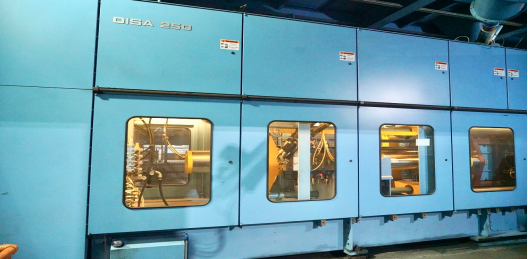
During casting and heat treatment, Haitian Heavy Industry adopts DISA automatic molding production line and standardized heat treatment processes to improve casting density, hardness uniformity, and impact resistance.
Through these processes, the risk of premature blow bar failure is significantly reduced.
4. Ceramic Composite Blow Bars and Customized Wear Solutions
For extremely abrasive working conditions, traditional metal blow bars may not always meet long-term operation requirements.
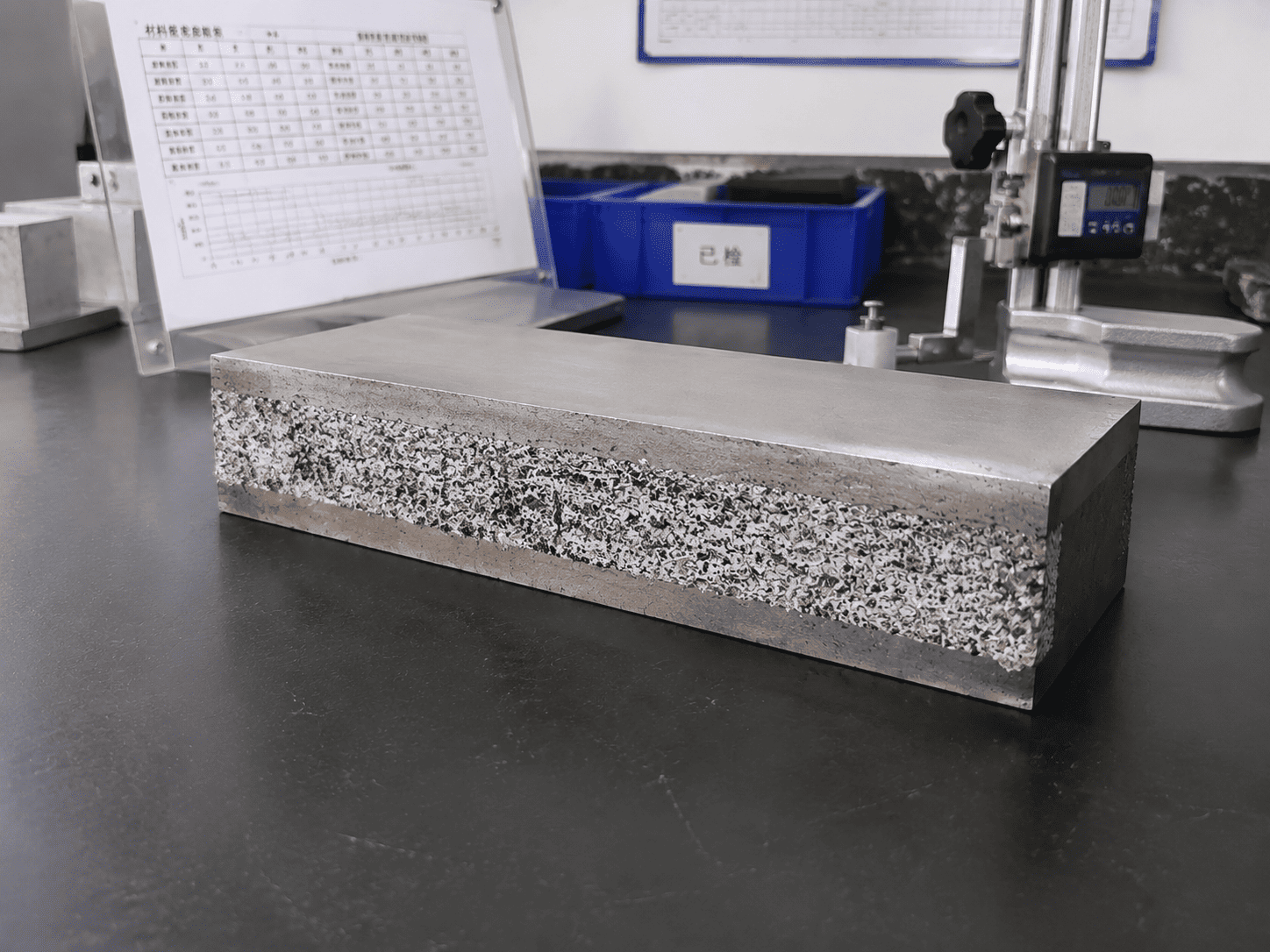
Ceramic composite blow bars combine a high chromium alloy matrix with ceramic reinforced particles. By utilizing the extremely high wear resistance of ceramic materials while maintaining the impact resistance of the metal matrix, ceramic composite blow bars provide enhanced performance in demanding applications.
Compared with traditional blow bars, ceramic composite blow bars can achieve under suitable working conditions:
• Up to 3 times longer service life
• Reduced replacement frequency
• Reduced equipment downtime
They are suitable for:
• Limestone crushing
• Highly abrasive aggregates
• Construction waste recycling
5. How Does Haitian Heavy Industry Optimize Blow Bar Service Life?
Longer blow bar service life does not rely only on material selection. It requires a complete engineering system.
Material Optimization
Based on customer operating conditions, Haitian Heavy Industry selects suitable alloy systems according to:
• Material hardness
• Impact intensity
• Equipment model
• Production requirements
Structural Optimization
According to different wear zones, Haitian Heavy Industry optimizes:
• High-impact area reinforcement
• Thickness distribution
• Stress balance
to improve overall service efficiency.
Manufacturing Process Control
From melting to final inspection, every product undergoes strict quality control, including:
• Chemical composition analysis
• Hardness testing
• Dimensional inspection
• Surface quality inspection
This ensures each blow bar meets customer application requirements.
6. Why Choose Haitian Heavy Industry Impact Crusher Blow Bars?
Haitian Heavy Industry specializes in manufacturing wear components for mining, asphalt, and concrete industries.
Our blow bar solutions feature:
✓ High Chromium Cr26 material technology
✓ Strict melting and heat treatment control
✓ DISA automatic molding production process
✓ Customized design based on actual working conditions
✓ Complete quality inspection system
Haitian Heavy Industry does not simply provide standard wear parts. We focus on identifying the actual failure causes of customer equipment and improving performance through material optimization, structural design, and manufacturing process control.
With professional engineering capabilities, Haitian Heavy Industry provides more stable, efficient, and cost-effective wear solutions for mining customers worldwide.

 Tik Tok


