


 English
 بالعربية
 Deutsch
 Français
 Bahasa Indonesia
 Italiano
 日本語
日本語 қазақ
қазақ 한국어
한국어 Bahasa Malay
 Монгол
 Nederlands
 Język polski
 Português
 Русский язык
 Español
 ภาษาไทย
 Türkçe
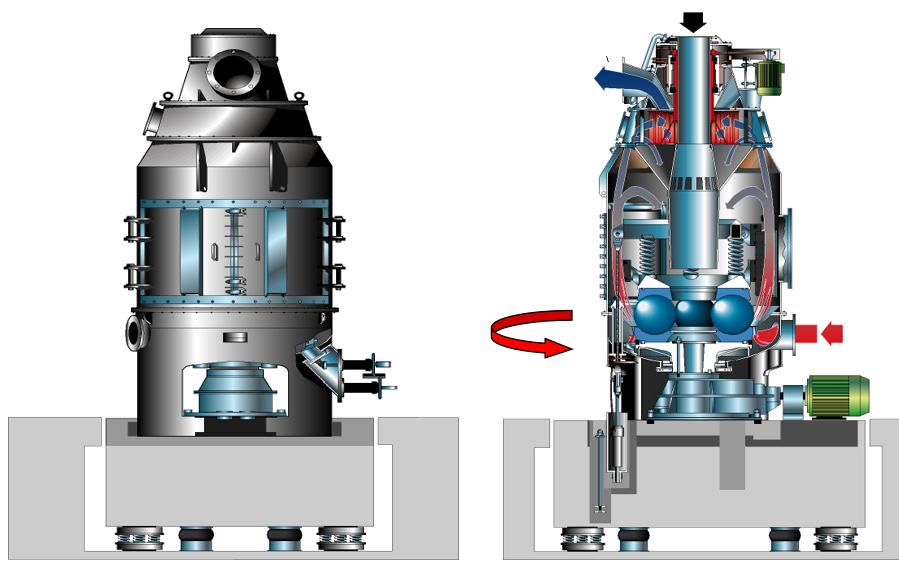
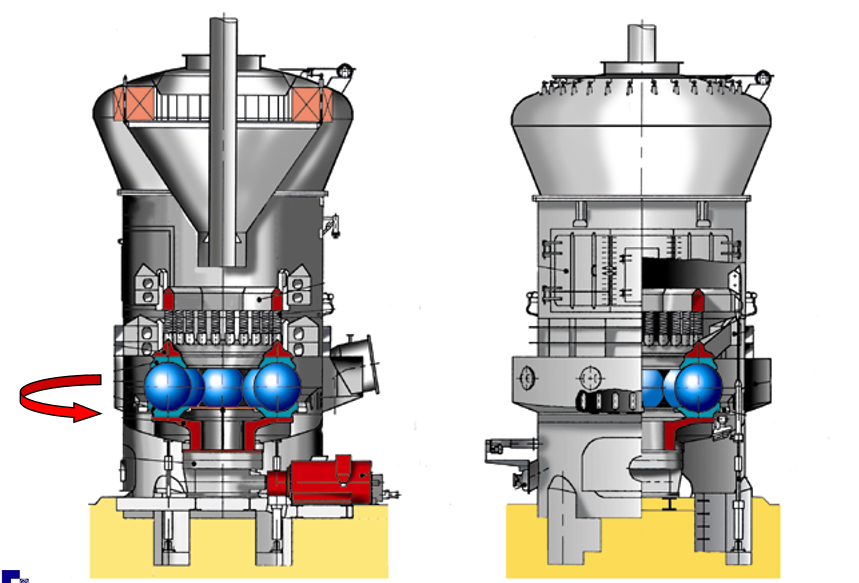
In the coal mining and thermal power industries, medium-speed coal mills operate under high loads for extended periods. Grinding balls are continuously subjected to coal impact, compression, friction, and repeated loading. For large medium-speed coal mills, grinding ball size, material properties, structural integrity, and manufacturing accuracy can directly affect equipment stability and grinding ball replacement intervals. Therefore, large hollow grinding balls are not simply conventional grinding balls made in a larger size. They require higher levels of material design, forming processes, joining technology, and quality control.
Haitian Casting develops large hollow grinding balls for medium-speed coal mill applications. Material and structural designs can be customized according to equipment specifications, coal characteristics, operating parameters, and actual wear conditions. Compared with conventional solid grinding balls, the hollow structure can reduce the overall weight while meeting the requirements of large grinding ball applications, making manufacturing, transportation, and on-site replacement more manageable. For large-scale equipment, this structural design also places higher demands on the manufacturer's dimensional control and overall forming capabilities.
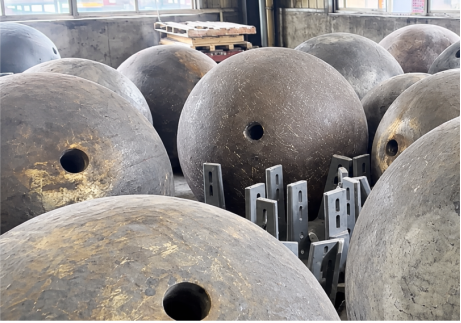
The Core Challenge of Large Hollow Grinding Balls: How to Form a Complete and Reliable Grinding Ball
The manufacturing challenge of large hollow grinding balls is not simply their size. The key is maintaining structural stability throughout the grinding ball at a large scale. If conventional methods are used for direct integral machining, the process requires a large amount of machining work and places high demands on equipment size and machining capacity. Material utilization and manufacturing costs can also be affected.
Haitian uses a segmented manufacturing process in which individual sections are manufactured and precisely matched before being joined into a complete grinding ball. The large grinding ball is divided into multiple structural units that are suitable for manufacturing and machining. Through dimensional control, interface matching, and dedicated joining processes, these sections are assembled into a complete spherical structure.
Throughout the process, strict control is required over the dimensions, fit-up condition, and joining areas of each component. The goal is to ensure that the finished grinding ball forms a complete and reliable working structure.
Customized Material Formulation Based on Coal Characteristics and Mill Operating Conditions
The wear resistance of a hollow grinding ball is not determined by a single chemical element. In actual operation, different coal types can vary significantly in hardness, ash content, gangue content, and abrasiveness. The loading method, operating time, and interaction between the grinding balls and grinding table can also affect the wear pattern.
Therefore, large hollow grinding balls require material design based on actual operating conditions rather than relying on a completely fixed general-purpose formulation.
Haitian can adjust material composition according to customer equipment parameters and operating conditions, seeking a reasonable balance between hardness, toughness, wear resistance, and impact resistance. For highly abrasive coal or applications containing a higher proportion of hard impurities, material design needs to place greater emphasis on wear resistance. For operating environments involving higher impact loads, however, excessive emphasis on hardness should be avoided if it results in insufficient toughness.
This application-based formulation approach allows the grinding ball material to better match actual operating conditions rather than simply being manufactured according to a fixed material grade.
New Material Development for Different Operating Conditions
In addition to conventional material systems, special applications of large hollow grinding balls require continuous development of new materials and optimization of material systems. In actual service, relying solely on increased hardness to address wear may affect toughness and impact resistance. Therefore, material development needs to consider overall performance.
Haitian has an integrated manufacturing process covering material formulation design, casting, heat treatment, and final inspection. Material solutions can be developed and evaluated according to different customer operating conditions. By coordinating the control of chemical composition, microstructure, and heat treatment processes, material properties can be better matched to the actual working environment of medium-speed coal mills.
For overseas power plants, coal mines, and related equipment maintenance companies, this means that grinding balls can be adjusted according to specific equipment and coal characteristics rather than being limited to fixed specifications and fixed material options.
Heat Treatment Determines the Final Material Properties
For wear-resistant castings, casting is only one part of the manufacturing process. Heat treatment also plays an important role in determining the final material properties. During actual operation, large hollow grinding balls are exposed to cyclic loading over extended periods. They therefore need not only good surface wear resistance but also sufficient internal structural stability and impact resistance.
Haitian uses controlled heat treatment processes to adjust the microstructure of grinding ball materials and controls key stages including heating, holding, and cooling. Different material formulations require different heat treatment windows, and process parameters need to be adjusted according to material composition and product dimensions rather than applying one uniform heat treatment schedule.
By coordinating material design with heat treatment processes, Haitian can better control the final hardness, microstructure, and overall mechanical properties of the grinding balls, providing a foundation for long-term operation in medium-speed coal mills.
Full-Process Quality Control from Raw Materials to Finished Products
Large hollow grinding balls are high-load wear components, and finished-product appearance inspection alone cannot fully determine product quality. Quality control therefore needs to cover multiple stages, including raw materials, melting, forming, heat treatment, machining, dimensional inspection, and final inspection.
During production, raw materials and melting composition are controlled, while chemical composition testing is used to verify that the material meets design requirements. After forming, product dimensions, structural condition, and critical areas are inspected. Following heat treatment, hardness and relevant properties are tested.
For large hollow grinding balls, particular attention is also required for joining areas and the overall structural condition to ensure that the products undergo comprehensive quality inspection before being delivered to the customer's site.
The purpose of full-process quality control is not simply to increase the number of inspections. More importantly, it is to identify potential problems as early as possible during production, shifting quality control from final inspection to the entire manufacturing process.
Rapid Custom Development to Shorten New Product Validation Cycles
For overseas customers, large hollow grinding balls typically need to be customized according to actual equipment dimensions, installation requirements, and operating conditions. Compared with purchasing standard-size products, developing grinding balls according to the customer's actual dimensions can provide better compatibility with existing equipment.
Haitian can develop customized grinding balls based on the original grinding ball dimensions, drawings, equipment parameters, and operating conditions provided by the customer. Material formulations and product structures can also be optimized according to specific project requirements.
Haitian has corresponding base molds, which can be adjusted according to the dimensions required by the customer for subsequent production. This approach helps meet specific dimensional requirements while improving the efficiency of new product development and manufacturing.
For large hollow grinding balls, the large dimensions and complex structures place high requirements on molds, casting, and subsequent machining. By making dimensional adjustments based on existing base molds, Haitian can reduce some preliminary development work and shorten the cycle from dimensional confirmation and design to sample production, providing support for customer product validation and wear solution optimization.
Large-Size Manufacturing Capability and Cost Control
The value of large hollow grinding balls is reflected not only in their wear resistance but also in the manufacturer's ability to produce large-size products and manage overall procurement costs. For overseas customers, large grinding balls typically involve significant material, machining, transportation, and replacement costs. Therefore, product structure and manufacturing processes can all affect the final procurement cost.
Through large hollow structural design and segmented manufacturing and assembly, Haitian can meet product dimensional requirements while reducing unnecessary material consumption and machining requirements. Compared with some similar overseas products, Haitian's products can reduce procurement costs by approximately 40% under specific project and size conditions. The actual cost advantage will vary depending on grinding ball dimensions, material system, order quantity, transportation method, and project requirements.
Hollow Grinding Ball Solutions for Overseas Coal Mining and Thermal Power Customers
The manufacturing of large hollow grinding balls is essentially a combination of material engineering, structural design, manufacturing processes, and quality control capabilities. For medium-speed coal mills, grinding balls are not simply individual wear components. Their performance is closely related to coal characteristics, equipment parameters, and operating conditions.
Haitian Casting provides wear-resistant solutions for coal mining and thermal power customers through customized material formulations, segmented manufacturing and assembly of large hollow grinding balls, new material development, heat treatment control, and full-process quality inspection.
For overseas customers requiring large or special-size hollow grinding balls, products can be designed and customized according to equipment specifications, grinding ball dimensions, material requirements, and actual operating conditions.

 Tik Tok


