



 English
 بالعربية
 Deutsch
 Français
 Bahasa Indonesia
 Italiano
 日本語
日本語 қазақ
қазақ 한국어
한국어 Bahasa Malay
 Монгол
 Nederlands
 Język polski
 Português
 Русский язык
 Español
 ภาษาไทย
 Türkçe
In the manufacturing of wear-resistant components for mining crushing equipment, most enterprises focus heavily on alloy composition design, heat treatment process optimization and product structural upgrading. However, in practical production and application, the fundamental underlying factor that determines whether material properties can be stably delivered and defines the upper limit of product service life is often the purity control of molten steel during the smelting stage.
Practical Customer Case: According to on-site feedback from a mining client in South Africa, under identical equipment operating conditions, Haitian Casting achieved more stable microstructure and mechanical properties for wear parts through high-purity molten steel control, material optimization and process improvement. The service life of our components is twice that of well-known first-tier brands previously used by the customer.
Core mining wear parts including cone crusher mantles, jaw crusher jaw plates and high manganese steel hammer heads rely entirely on clean, homogeneous and stable molten steel matrix to deliver key performance indicators: work-hardening capacity, impact toughness and crack resistance. Even when adopting standard high manganese steel grades such as Mn13Cr2, Mn18Cr2 and Mn22Cr2 with mature supporting heat treatment processes, the presence of oxide inclusions, gas defects, segregation of harmful elements and other impurities in molten steel will still result in inconsistent service life and frequent unexpected failures of castings on site.
Therefore, the quality stability and service life consistency of high manganese steel mining wear parts hinge fundamentally on the control standard of molten steel purity.
1. Why Do Mining-Grade High Manganese Steels Require Extra Strict Molten Steel Purity?
Mining crushing operations operate continuously under extreme conditions featuring heavy impact, high load and severe abrasive wear. High manganese steel has become the dominant material for mining wear parts thanks to its unique dynamic work-hardening characteristic: when subjected to impact and extrusion from ores, the surface layer continuously hardens to enhance wear resistance, while the matrix retains sufficient toughness to withstand fracture caused by repeated impacts.
Nevertheless, high manganese steel molten liquid features extremely high chemical activity. It is prone to oxidation, gas absorption and accumulation of non-metallic inclusions during smelting. Insufficient purity control will directly trigger three typical on-site failure modes:
1.1 Frequent Cracking and Spalling Under Heavy Impact Loads
Oxide and non-metallic inclusions trapped inside castings break the continuity of the metallic matrix. Under cyclic impact loads from bulk ores, stress concentration occurs around inclusion zones, gradually initiating microcracks. These cracks propagate continuously and eventually lead to local spalling or overall structural fracture, drastically shortening the service cycle of spare parts.
1.2 Deteriorated Work-Hardening Effect and Sharply Reduced Wear Resistance
The outstanding wear resistance of high manganese steel originates from in-service dynamic work hardening. Internal defects such as pores, inclusions and shrinkage porosity destroy the integrity of the matrix structure, resulting in uneven formation and insufficient hardness of the surface hardened layer. Consequently, the components suffer accelerated material loss and fail to meet expected wear resistance requirements.
1.3 Inconsistent Batch Performance and Uncontrollable Maintenance
Batch-to-batch fluctuation in molten steel purity directly causes performance discrepancies among products of the same model and material grade. For mining operators, this translates to unpredictable service life and replacement cycles of wear parts, disrupting equipment maintenance schedules, increasing unplanned downtime risks and pushing up overall operation costs.
2. Main Types of Impurities in High Manganese Steel Molten Iron and Their Failure Mechanisms
Defects impairing the quality of high manganese steel castings fall into three major categories: oxide inclusions, harmful sulfur & phosphorus elements, and hydrogen & nitrogen gas defects. Each category undermines material performance from the perspectives of microstructure, toughness and abrasion resistance respectively.
2.1 Oxide Inclusions: Disrupting the Continuity of Matrix Microstructure
During smelting, active elements like manganese and silicon are easily oxidized to form MnO, SiO₂ and complex composite oxide inclusions. These inclusions cannot metallurgically bond with the steel matrix, creating structurally weak zones. Under crushing impact loads, cracks preferentially nucleate and expand at inclusion sites. Meanwhile, oxide inclusions hinder the uniform development of the work-hardened layer, severely compromising both wear resistance and impact resistance of finished products.
2.2 Sulfur and Phosphorus: Weakening Grain Boundary Stability and Causing Brittle Fracture
Sulfur and phosphorus are strictly restricted harmful elements in high manganese steel production. Sulfur tends to form low-melting-point sulfides segregated at grain boundaries, inducing hot brittleness and raising the risk of cracking during pouring and service. Phosphorus triggers grain boundary segregation and drastically reduces impact toughness. In high-intensity mining impact conditions, weakened grain boundaries directly lead to brittle rupture and chunk falling-off, making them core controlled indicators for premium wear-resistant castings.
2.3 Hydrogen and Nitrogen Gases: Forming Hidden Internal Defects
Excessive hydrogen absorption leads to microscopic pinholes and shrinkage porosity inside castings; abnormal nitrogen absorption generates brittle nitrides and embrittles the matrix. These invisible latent defects greatly reduce casting density and fatigue resistance, easily causing fatigue fracture and abnormal abrasive wear during long-term continuous production.
3. Full-Process Purity Control System for High Manganese Steel Molten Iron at Haitian Casting
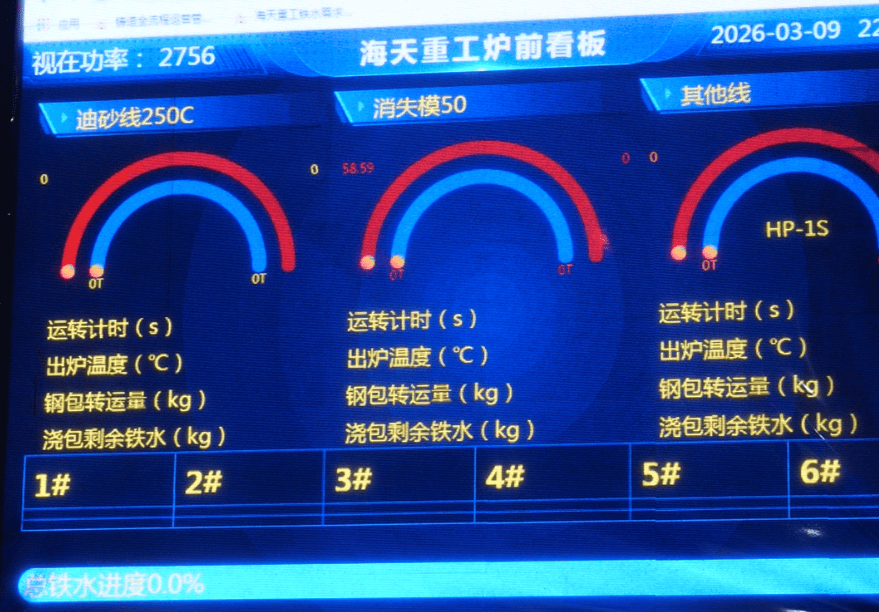
To meet the high stability and reliability requirements of mining wear parts, Haitian Casting has established a full-chain molten steel purity management system covering raw material screening → precision smelting → deoxidation and inclusion removal → static purification → pre-pour furnace inspection, eliminating internal defects from the source and guaranteeing consistent quality for every heat of molten steel.
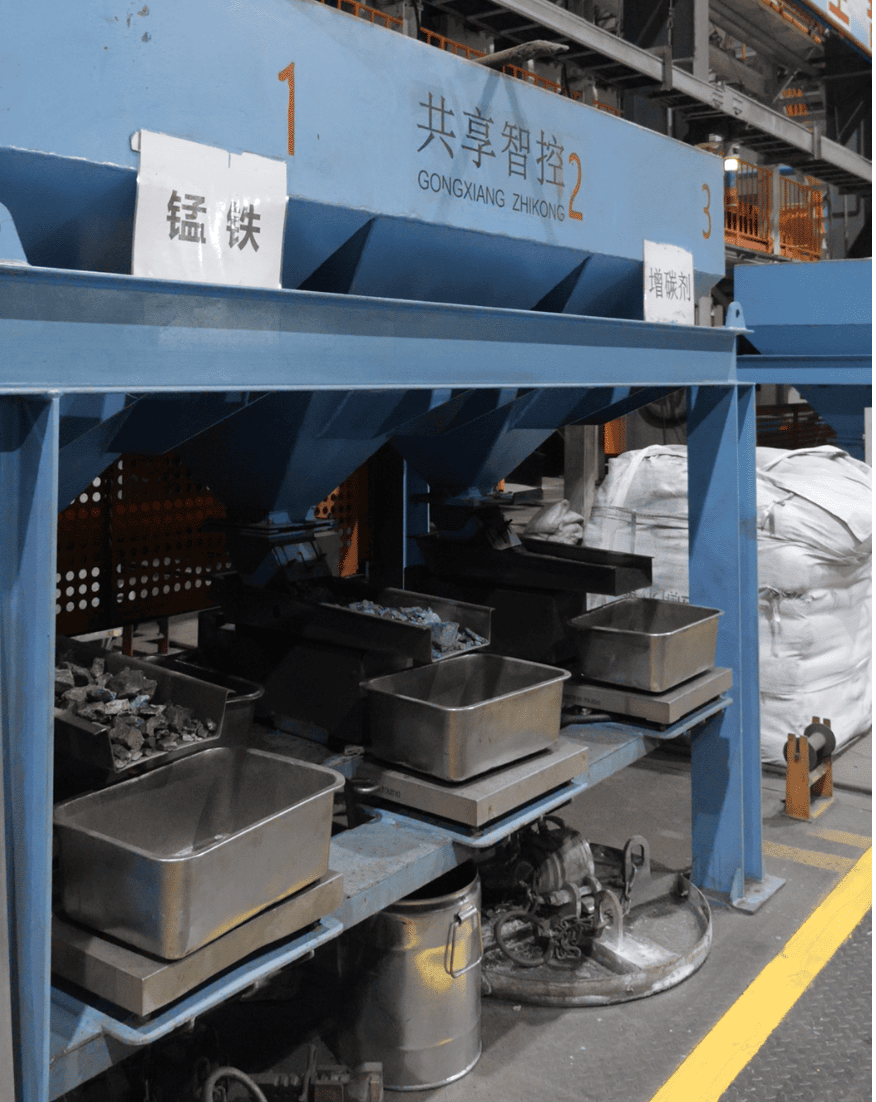
3.1 Graded Raw Material Screening to Control Impurities at the Source
The purity of molten steel fundamentally depends on raw material quality. Haitian Casting conducts rigorous inspection on ferromanganese, ferrochrome, alloy additives and iron-based feedstock. Rusty, oil-contaminated, severely oxidized and over-impurity materials are prohibited from charging into the furnace, minimizing the ingress of sulfur, phosphorus, oxide inclusions and other contaminants to lay a solid foundation for high-quality molten steel.
3.2 Precise Intermediate Frequency Smelting to Restrain Oxidation Risks
Intermediate frequency electric furnaces are adopted for accurate smelting with standardized control over melting temperature, heating rate and holding duration, avoiding secondary oxidation of molten steel and excessive alloy burning loss caused by overheating. Slagging is performed simultaneously during melting to form a protective slag layer that isolates air and adsorbs suspended inclusions for preliminary purification of the molten bath.
3.3 Graded Deoxidation & Dynamic Slag Skimming to Lower Inclusion Content
A dual-process of pre-deoxidation plus final deoxidation is applied to eliminate free oxygen in molten steel and suppress oxide generation. Real-time dynamic slag skimming removes floating slag and inclusions timely, minimizing residual trapped slag inside molten steel and elevating matrix cleanliness.
3.4 Molten Steel Static Purification to Improve Casting Density
A dedicated holding and settling stage is arranged after smelting completion, allowing residual dissolved gases and fine suspended inclusions to fully float up and separate. This effectively eliminates microporosity, internal shrinkage and structural heterogeneity, comprehensively enhancing casting compactness and microstructure uniformity.
3.5 Pre-Pour Spectroscopic Testing for Data-Driven Quality Control
Before pouring each heat, direct-reading spectrometers carry out full chemical composition analysis to accurately verify alloy ratios of carbon, manganese, chromium, molybdenum, etc., while stringently capping the content of harmful sulfur and phosphorus. Unqualified molten steel is blocked and adjusted without exception. Data-based standardization ensures consistent batch quality and eliminates performance deviation.
4. Core Performance Improvements Brought by High-Purity Molten Iron
Extreme control over molten steel purity ultimately delivers long-term stability and high cost performance for mining wear parts, reflected in four key advantages:
More homogeneous metallographic structure: Free from concentrated inclusions, pores and shrinkage defects, the castings feature dense and unified overall microstructure, thoroughly solving inconsistent performance between batches.
Stable work-hardening behavior: The clean metallic matrix enables even formation of high-strength hardened layers, fully unlocking the inherent wear-resistant properties of high manganese steel and significantly extending service life.
Enhanced reliable impact resistance: Elimination of grain boundary embrittlement from impurities greatly boosts the anti-impact, anti-cracking and anti-spalling capacity, perfectly adapting to harsh mining working conditions.
Maximized heat treatment effect: Stable and pure matrix material gives full play to the advantages of solution annealing (water toughening) process, achieving the optimal balance between wear resistance and impact toughness.
5. Conclusion: Pure Molten Steel Is the Cornerstone of High-Quality Wear Castings
For high manganese steel mining wear parts, alloy formulations define the upper limit of product performance, while molten steel purity determines whether designed performance can be steadily realized. Common on-site problems including short service life, abnormal abrasive loss, impact cracking and unstable batch quality are mostly not attributed to material grades, but latent quality defects resulting from inadequate smelting purity control.
Adhering to the production philosophy of Purify molten steel first, then produce castings, Haitian Casting leverages a full-process, data-backed purity control system to avoid internal casting defects from the very beginning. It ensures stable wear resistance and prolonged service life for every mantle, jaw plate and hammer head. We help mining clients cut spare part consumption, reduce equipment downtime frequency and lower overall operation and maintenance costs, delivering highly reliable wear-resistant casting solutions for mineral crushing production lines.

 Tik Tok


