



 English
 بالعربية
 Deutsch
 Français
 Bahasa Indonesia
 Italiano
 日本語
日本語 қазақ
қазақ 한국어
한국어 Bahasa Malay
 Монгол
 Nederlands
 Język polski
 Português
 Русский язык
 Español
 ภาษาไทย
 Türkçe
Asphalt plant operational stability largely depends on its mixing unit to deliver consistent, high-quality asphalt mixes for on-site construction. Mounted inside the mixing chamber, mixer liners shield the mixer body from persistent abrasion by hot aggregates throughout production. Liner wear and cracking trigger prolonged equipment downtime and push up overall maintenance expenses. For this reason, proper liner material selection is crucial, as it directly determines the asphalt plant’s operational stability and efficiency.
Key Factors That Affect Lining Plate Performance
Design and Geometry
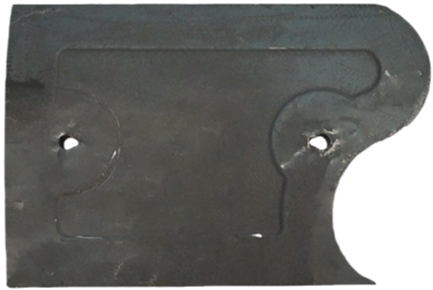
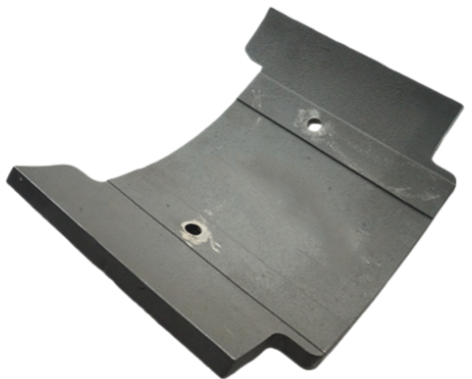
Asphalt mixing plant lining plates are critical wear parts for asphalt mixers, serving two core purposes in production: protecting the mixer body from continuous friction and impact from aggregates and asphalt mixes, and retaining the chamber’s original inner structure to stabilize mixing performance. Field experience confirms there is no one-size-fits-all standard for liner thickness, curved profiles and overall dimensions. These parameters must be customized to match the internal structure of different mixer models.
Customized liner designs precisely control blade-to-wall clearances within standard engineering tolerances. Poorly fitted liners alter the mixer’s effective working volume and deviate blade operating trajectories. Even minor dimensional errors disrupt uniform material blending, leading to inconsistent asphalt quality.
Liner segmentation and bolt layout greatly impact maintenance efficiency. Most mainstream manufacturers use modular liners with standard fasteners, enabling fast, safe replacement during routine shutdowns for stable production. Outdated bulky, unreasonable liner structures complicate daily inspection and maintenance, easily causing abnormal wear, sudden faults and unplanned downtime, which disrupt continuous operation and reduce production efficiency.
Materials for Heat and Abrasion Resistance
Asphalt mixer liners operate under extreme working conditions, enduring constant high temperatures and sustained abrasion from flowing materials. The industry primarily applies three types of liner materials: high-chromium cast iron, wear-resistant alloy steel and composite lining plates. These materials retain stable hardness at typical mixing temperatures and resist repeated impact from raw aggregates and recycled RAP materials.
Practical on-site performance under real thermal conditions matters far more than simple room-temperature lab test results. Alloys that soften, deform or crack under cyclic temperature shifts tend to fail prematurely. Properly selected liner grades deliver excellent abrasion resistance and thermal fatigue stability through continuous heating and cooling cycles, offering dependable protection for bolt holes and structurally stressed key areas.
Mixing of accuracy and surface condition
Mixing blades and scrapers maintain constant frictional contact with liner surfaces during operation, which gradually creates irregular wear over time. Deepening surface grooves and hardened material deposits shift real-time blade clearances during production. These inconsistencies form uneven mixing zones within the chamber, where residual aged asphalt mixes with fresh raw materials and drastically compromises batch uniformity and final product quality.
High-quality liners preserve a smooth, stable inner surface throughout most of their service life. When paired with well-structured scrapers, they maintain the mixer’s original shear force and material flow properties. This ensures every asphalt batch achieves consistent, standardized mixing results.
Thermal fatigue and mounting
Frequent equipment start-stop cycles and regular recipe adjustments impose continuous thermal stress on asphalt mixer liners. Premium liner designs accommodate thermal expansion and contraction flexibly under temperature fluctuations, preventing surface cracking and peeling. Optimized structural design eliminates sharp corners and stress-concentrated zones, while standardized installation practices evenly distribute operating pressure across the entire liner surface.
Even high-strength, premium liners can suffer premature damage from faulty installation. Unstandardized clamping and insecure fixation create persistent friction between liners and the mixer housing. This gradual abrasive wear deteriorates components and leads to early, unplanned failure.
Condition Monitoring and Maintenance Planning
On-site operators can monitor liner health through daily visual inspections and real-time equipment operational data. Abnormal motor power draw, prolonged mixing cycles and irregular machine vibration are typical warning signs of worn or damaged liners.
Plants can avoid unplanned downtime by establishing routine inspection and replacement schedules based on actual production tonnage and batch output. This proactive maintenance strategy eliminates emergency shutdowns triggered by sudden liner failure, sustaining stable, efficient long-term production.
Common Lining Plate‑Related Challenges in Asphalt Production
Uneven Mixing and Internal Build-Up
Rough, worn liner surfaces easily trap asphalt binders and fine particles, cutting down the mixer’s effective working volume and disrupting normal material flow. This undermines mixing consistency and adds unnecessary daily cleaning workload. Smooth-wear liner materials, profile-matched scrapers and consistent routine cleaning together effectively prevent material accumulation. Upgrading liners and scrapers in sync optimizes mixing quality reliably with minimal capital input.
Short Service Life and Frequent Change-Outs
Most premature asphalt mixing plant lining plates failure stems from mismatched material grade or insufficient thickness for actual site conditions. Standard steel liners wear quickly when processing hard aggregates and high RAP ratios, leading to frequent shutdowns. Switching to high-chromium or composite liners and reinforcing critical high-wear zones greatly extends service life. This cuts repetitive, high-volume maintenance work and reduces safety risks during confined mixer cavity operations.
Cracking Under Thermal Cycles
Liner cracking creates serious safety and operational risks. Loose liner fragments can impact and damage mixing blades, while leaving the mixer shell fully exposed to direct abrasion. Thermal cracking is largely preventable with high-toughness, heat-resistant materials, standardized heat treatment and smooth, rounded structural designs. Matched standard bolts and precise fastening practices further minimize structural cracking and premature failure.
Complex and Time-Consuming Liner Replacement
Confined working spaces and oversized, cumbersome liner components slow down replacement work and introduce safety risks, often leading to delayed liner change-outs. Modern modular bolt-on liners feature standardized fasteners, optimized sizing and integrated lifting structures. The streamlined, rationalized design speeds up on-site replacement, making equipment downtime more predictable and controllable.
How Advanced Design Improves Lining Plate Reliability
Upgraded modern lining plate designs integrate structural optimization, high-performance material pairing, geometric fine-tuning and maintainable on-site features into a holistic solution. Curved reinforcing structures evenly disperse impact pressure and frictional wear during mixing operation, effectively preventing liner displacement and mechanical vibration. Premium alloys processed with professional heat treatment maintain steady hardness and toughness under actual working temperatures. Meanwhile, composite liner structures deliver balanced mechanical properties, performing reliably against persistent abrasion and sporadic material impact.
Precise geometric calibration keeps blade clearances and operating trajectories within factory design tolerances. Customized plate thickness and surface profiles enable thorough scraping and full homogeneous mixing, eliminating structural voids and dead mixing zones. The segmented structural layout accommodates uneven on-site wear distribution, adopting thickened heavy-duty plates for high-impact areas and standard lightweight plates for low-load sections. This targeted differentiated design extends overall liner service life, achieves uniform wear performance, and supports partial localized replacement. It simplifies daily maintenance and improves overall operational controllability for asphalt mixing equipment.
What Should Companies Consider Before Choosing an Asphalt Mixing Plant Lining Plate?
Liner selection should be tailored to actual on-site operating conditions and in-house maintenance capacity, instead of relying solely on standard catalogue parameters. Multiple core technical operational factors need to be prioritized for accurate matching.
Key technical indicators cover annual production tonnage and total batch volume, aggregate hardness, RAP proportion and filler content, regular mixing temperature range, as well as mixer brand, chamber geometry and internal blade layout. These parameters jointly determine the required liner material grade, thickness configuration and structural design.
Aside from equipment and material conditions, plant operational and maintenance capacity also matters. This includes feasible plant shutdown frequency, on-site crew technical proficiency, and available lifting and access equipment. Operators also need to clarify core demand preferences: prioritizing extended liner service life with higher initial investment, or adopting a cost-balanced solution with targeted partial upgrades.
Supplier comprehensive capability is another decisive factor for long-term operational stability. Reliable professional suppliers deliver practical, site-adapted solutions, including customized liner geometry that fits specific mixers without on-site rework, optimized material and thickness schemes based on real mixing conditions and operating loads, and scientific segmented layout and replacement strategies aligned with the plant’s production schedule.
Simple comparison of lining options
| Aspect | High‑performance liner | Standard liner |
| Material | High‑chromium / composite, heat‑stable | Basic steel or standard cast iron |
| Wear life | Longer life in hot, abrasive duty | Shorter life, more change‑outs |
| Thermal behavior | Resists cracking and spalling | Higher risk under thermal cycling |
| Geometry/fit | OEM‑matched curvature and bolt pattern | Generic fit, possible clearance issues |
| Replacement | Segmented, bolt‑in, faster to change | Larger plates, slower replacement |
Manufacturing Quality Behind Reliable Lining Plates
Consistently reliable asphalt mixing plant lining plates depend on standardized metallurgical workflows and strict production oversight, rather than generic material grade labeling alone. High-chromium and wear-resistant alloy liners require precise melting protocols and optimized casting layouts to achieve sound, defect-free structural integrity. Targeted heat treatment stabilizes material hardness and toughness, tailoring mechanical properties to match the actual thermal conditions of asphalt mixing operations. Tight tolerances for curvature, plate thickness and bolt hole positioning guarantee perfect fit with mixer chambers and maintain blade clearances within qualified operational ranges.
Multi-layer quality inspection is essential to avoid premature liner failure, covering chemical composition analysis, hardness and impact testing, dimensional verification and pre-assembly validation. Reputable manufacturers iterate product designs based on real field performance data. By adjusting thickness distribution, material formulations and segmented layouts according to actual wear patterns, manufacturers continuously improve liner usability and operational reliability.
Why Choose HAITIAN for Asphalt Mixing Plant Lining Plate Solutions
HAITIAN Heavy Industry specializes in wear-resistant components for asphalt, concrete and mining equipment. Its custom asphalt mixer liners are engineered to shield mixer inner walls from hot mix abrasion while preserving the chamber’s original geometry and mixing efficiency.
Equipped with advanced molding lines, regulated melting and heat treatment processes, and precision machining capabilities, HAITIAN delivers high-chromium liners with superior wear resistance and stable thermal performance. Optimized geometric profiles and standardized bolt patterns match mainstream mixer designs, simplifying on-site installation and replacement.
Beyond manufacturing precision, HAITIAN leverages extensive field application experience. The team evaluates each customer’s unique operating conditions, including aggregate properties, RAP ratios, mixing temperatures and common equipment failure modes, to recommend customized material grades, plate thickness configurations and segmented layouts. This approach turns conventional wear parts into practical solutions that cut unplanned downtime and stabilize batch quality, rather than supplying merely standardized components.
FAQ
1. What Is the Main Function of an Asphalt Mixing Plant Lining Plate?
The asphalt mixing plant lining plate serves as primary protection for the mixer shell. It withstands continuous abrasion from hot aggregates and asphalt mixes, while preserving the mixing chamber’s original geometry. Stable chamber profiles maintain standard blade clearances, ensuring consistent and uniform mixing performance.
2. How Can High-Quality Asphalt Mixing Plant Lining Plates Improve Production Efficiency?
Premium lining plates feature excellent wear and heat resistance, extending service life and cutting unplanned shutdowns. It keeps blade gaps stable throughout operation, maintaining consistent motor load, mixing cycle and overall equipment efficiency to sustain continuous production.
3. What Material Factors Should Buyers Consider When Selecting Lining Plates?
Material selection must match actual working conditions, not just cost. Key factors include aggregate hardness, RAP proportion, filler content and mixing temperature. Ideal lining plate materials balance strong abrasion resistance and thermal fatigue tolerance for long-cycle operation.
4. How Does Lining Plate Design Affect Asphalt Mixture Quality?
Lining plate thickness, profile and structural design directly control blade-to-wall clearances and internal material shearing. Optimized geometry eliminates dead mixing zones and material buildup, improving binder distribution and finished asphalt uniformity for stable product quality.
5. Why Choose a Professional Lining Plate Manufacturer Like HAITIAN?
HAITIAN delivers reliable lining plates through premium wear-resistant alloys, precision casting, standardized heat treatment and optimized structural design. With rich on-site application experience, HAITIAN customizes liner solutions for diverse working conditions, extending service life, reducing maintenance downtime and stabilizing overall mixer operation.

 Tik Tok


