



 English
 بالعربية
 Deutsch
 Français
 Bahasa Indonesia
 Italiano
 日本語
日本語 қазақ
қазақ 한국어
한국어 Bahasa Malay
 Монгол
 Nederlands
 Język polski
 Português
 Русский язык
 Español
 ภาษาไทย
 Türkçe
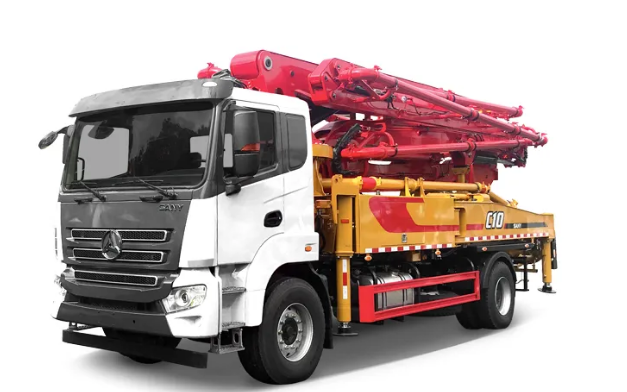
Concrete pump elbow pipes are among the highest-wear components in concrete pumping systems. Compared with straight pipes, elbows are exposed to stronger centrifugal forces, high-pressure impact, and continuous abrasion from coarse aggregates. Their performance directly affects pumping efficiency, equipment downtime, and total lifecycle cost.
As global construction projects move toward higher output, longer pumping distances, and more abrasive concrete mixes, traditional elbow pipe designs have reached their limits. This has driven a clear technological evolution—from single-layer steel pipes to advanced composite structures.
Ma’anshan Haitian Heavy Industry Technology Co., Ltd. is the first manufacturer in China to successfully mass-produce concrete pump elbow pipes with a dual-layer inner liner structure, setting a new benchmark for wear-resistant pump components.
Why Elbow Pipes Wear Faster Than Straight Pipes
When concrete flows through an elbow, centrifugal force pushes coarse aggregates toward the outer curvature of the bend. This creates localized high-pressure abrasion zones, leading to uneven wear and premature failure if material performance is insufficient.
This wear mechanism explains why elbow pipes typically fail several times faster than straight pipes—and why advanced material selection and structural design are essential.
Stage 1: Single-Layer High Manganese Steel Elbow Pipes
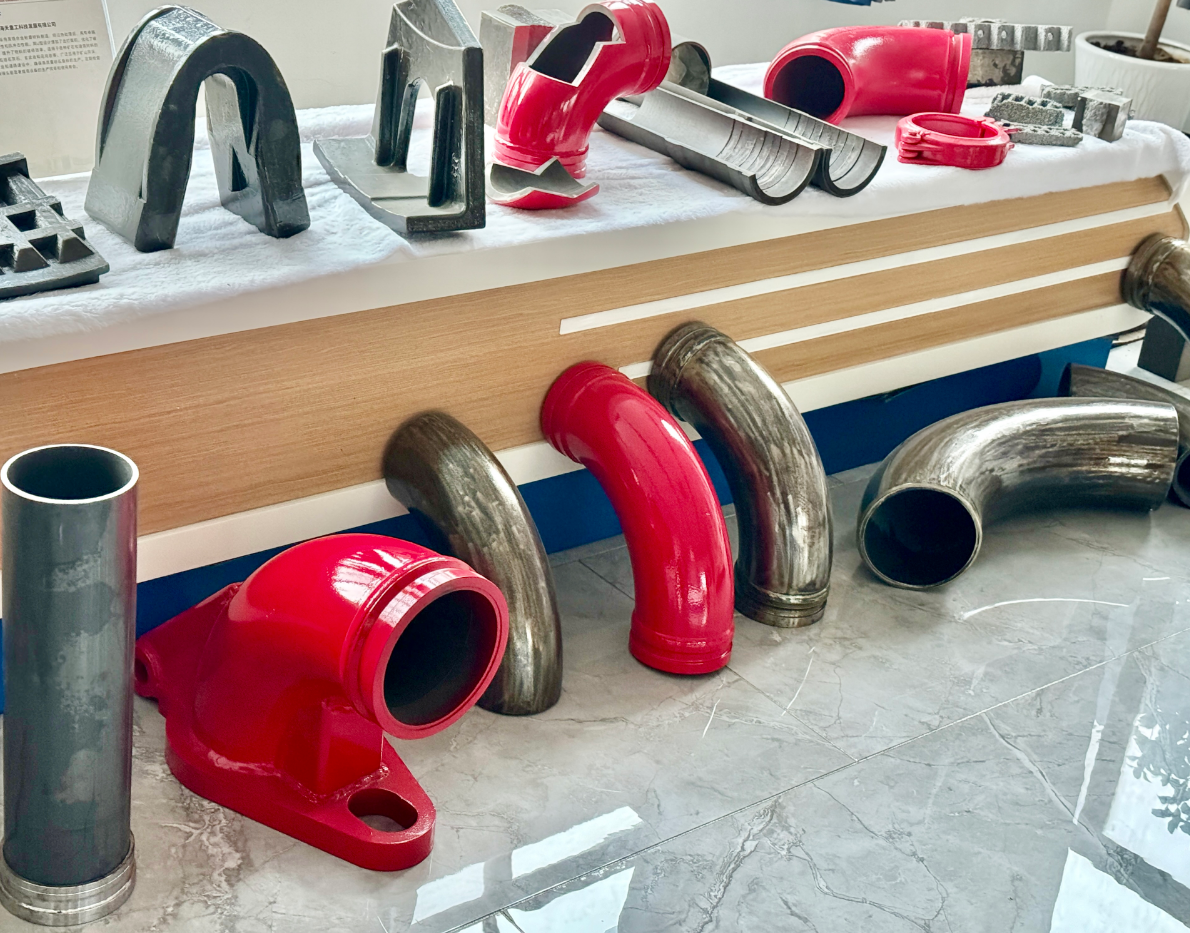
In the early development of concrete pump trucks, elbow pipes were commonly manufactured from single-layer high manganese steel, valued for its toughness and forming capability.
Advantages
Good impact resistance
Mature manufacturing process
Suitable for low to medium pumping intensity
Limitations
Rapid wear under high-pressure, high-output pumping
Short service life in abrasive concrete conditions
Frequent replacement increases downtime and maintenance costs
As pumping demands increased, the limitations of single-layer designs became increasingly evident.
Key Breakthrough: Dual-Layer Inner Liner Elbow Pipe Technology
Building on years of wear-material research and extensive jobsite feedback, Haitian Heavy Industry pioneered dual-layer inner liner elbow pipe technology in China.
Instead of relying on a single material to balance toughness and wear resistance, this design separates functions:
Structural strength is provided by the outer layer
Abrasion resistance is handled by the inner liner
This system-level approach fundamentally improves durability and operational reliability.
Composite Elbow Pipe Structure Explained
Outer Layer: Q235 / Q345 High-Toughness Steel
The outer pipe layer is manufactured from Q235 or Q345 steel, selected for its excellent ductility and forming properties:
Ideal for complex elbow geometries
Strong resistance to pressure and impact
Ensures overall structural stability during high-pressure pumping
Inner Liner: High Chromium Cast Iron (High-Cr)
The inner liner—directly in contact with concrete—is made from high chromium cast iron, delivering exceptional abrasion resistance:
Extremely high hardness
Chromium carbide (Cr₇C₃) microstructure
Up to 5× longer service life than ordinary steel
3–5× longer than conventional alloy steel
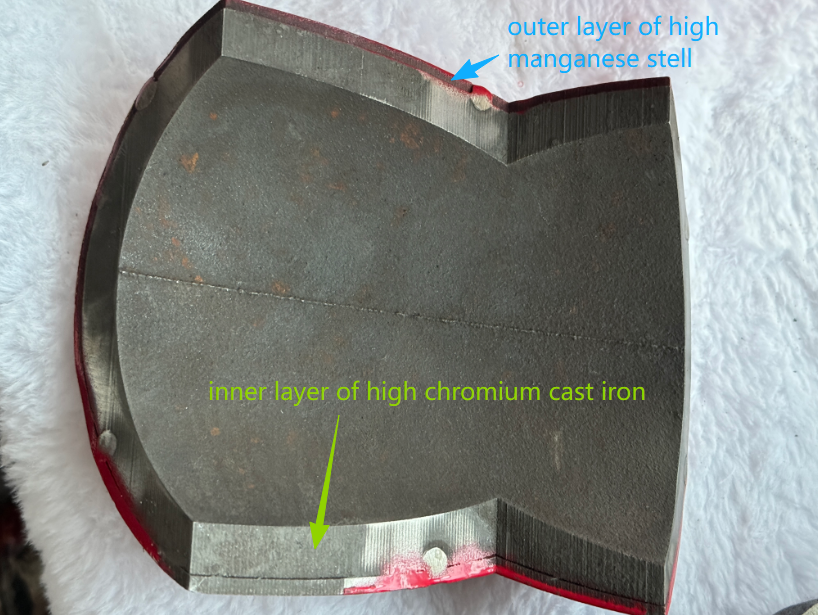
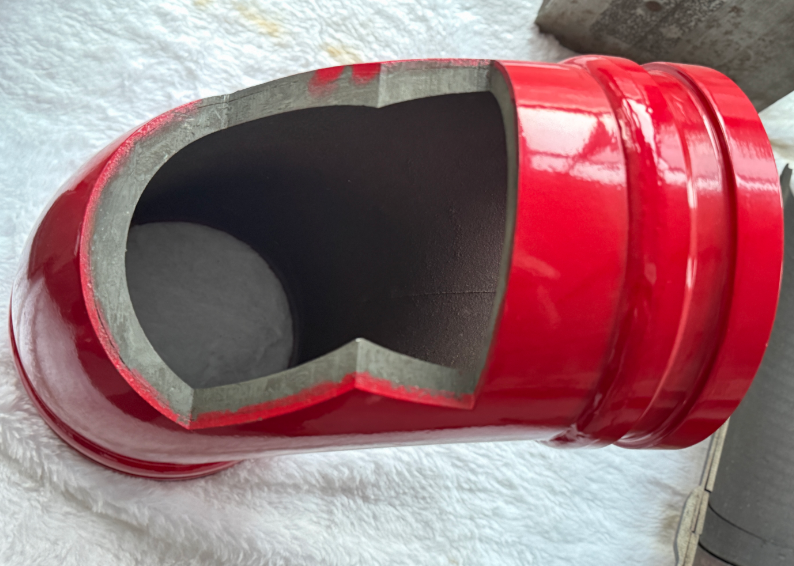
High chromium cast iron is widely recognized by global concrete pump manufacturers as one of the most effective materials for abrasive pumping conditions.
Proven Performance: Over 60,000 m³ Service Life
Through laboratory testing and long-term field validation, Haitian’s dual-layer composite elbow pipes have demonstrated:
Service life exceeding +60,000 cubic meters
More uniform wear distribution
Reduced risk of sudden leakage or burst failure
These results are based on real operating conditions, not theoretical simulations.
Customized Design Based on Pump Model and Working Conditions
Elbow pipe service life depends not only on material selection, but also on design parameters such as:
Pump model and output pressure
Elbow radius and bending angle
Concrete mix design and aggregate size
Haitian Heavy Industry customizes inner liner thickness and wear grade according to specific working conditions, helping customers achieve the lowest cost per cubic meter pumped.
Why Choose Haitian Casting
First manufacturer in China to mass-produce dual-layer inner liner concrete pump elbow pipes
Strong expertise in wear-resistant materials and casting technology
Proven performance in high-pressure, high-abrasion environments
Flexible customization for global concrete pump brands
Conclusion
The evolution from single-layer high manganese steel to dual-layer composite elbow pipes represents a major advancement in concrete pump wear technology.
As a technology-driven manufacturer, Ma’anshan Haitian Heavy Industry Technology Co., Ltd. continues to innovate in materials, structure, and manufacturing processes—delivering longer-lasting, more reliable concrete pump wear parts to customers worldwide.
Wear resistance is proven in real working conditions—not on paper.
Frequently Asked Questions (FAQ)
FAQ 1
What is the service life of a dual-layer concrete pump elbow pipe?
The service life of a dual-layer concrete pump elbow pipe largely depends on pumping pressure, concrete mix, and working conditions. Under typical high-abrasion applications, Haitian Heavy Industry’s dual-layer composite elbow pipes have been field-tested to exceed 60,000 cubic meters of concrete, significantly outperforming traditional single-layer steel elbow pipes.
FAQ 2
Why do concrete pump elbow pipes wear faster than straight pipes?
Concrete pump elbow pipes wear faster because centrifugal force pushes coarse aggregates toward the outer wall of the bend. This creates localized high-pressure abrasion zones, leading to accelerated and uneven wear. Without sufficient wear-resistant materials, elbow pipes will fail much earlier than straight pipes.
FAQ 3
What are the advantages of high chromium cast iron inner liners?
High chromium cast iron contains a high volume of chromium carbides (Cr₇C₃), which provide exceptional resistance to sliding and impact abrasion. Compared with ordinary steel, high chromium cast iron offers up to 5 times longer service life, and 3–5 times longer life than conventional alloy steel, making it ideal for abrasive concrete pumping conditions.
FAQ 4
What is the difference between single-layer and dual-layer elbow pipes?
Single-layer elbow pipes rely on one material to balance toughness and wear resistance, which limits performance under severe conditions. Dual-layer elbow pipes separate these functions: the outer layer provides structural strength and formability, while the inner liner focuses on wear resistance. This design significantly improves durability and reduces replacement frequency.
FAQ 5
Can concrete pump elbow pipes be customized for different pump models?
Yes. Haitian Heavy Industry customizes concrete pump elbow pipes based on pump model, pumping pressure, elbow angle, and concrete mix design. Inner liner thickness and wear grade can be adjusted to match specific working conditions, helping customers achieve the lowest cost per cubic meter pumped.

 Tik Tok


