



 English
 بالعربية
 Deutsch
 Français
 Bahasa Indonesia
 Italiano
 日本語
日本語 қазақ
қазақ 한국어
한국어 Bahasa Malay
 Монгол
 Nederlands
 Język polski
 Português
 Русский язык
 Español
 ภาษาไทย
 Türkçe
In the construction machinery and mining industries, wear-resistant parts are constantly exposed to severe abrasion, heavy impact, and high-pressure working conditions. Components such as mixer liners, blades, crusher blow bars, and asphalt plant wear plates must maintain high hardness while also retaining sufficient toughness to avoid cracking or premature failure.
This is why heat treatment plays a critical role in the manufacturing of high-quality wear parts.
What Is Heat Treatment?
Heat treatment is a controlled manufacturing process that changes the microstructure of metal materials through heating, holding, and cooling. The purpose is to improve the mechanical properties of castings, including:
Hardness / Wear resistance / Impact toughness / Fatigue resistance / Structural stability
For wear-resistant castings used in concrete batching plants, asphalt mixing plants, and mining equipment, proper heat treatment directly affects product lifespan and operational efficiency.
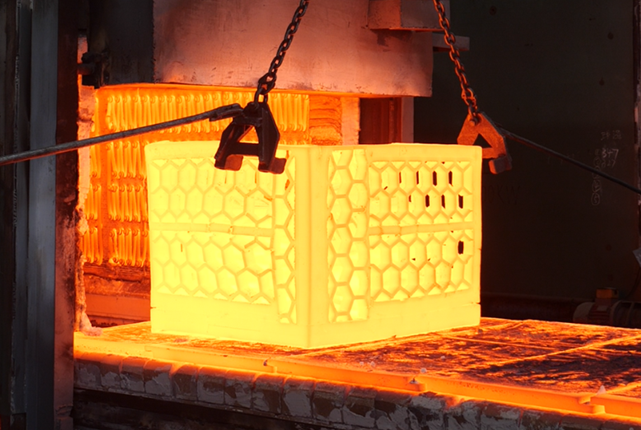
Why Heat Treatment Matters for Wear Parts
1. Improved Wear Resistance
After heat treatment, the hardness of alloy castings can be significantly increased. This allows liners, blades, and crusher parts to better resist abrasion caused by aggregates, sand, gravel, and ore materials.
For example, high chromium cast iron wear parts can achieve excellent hardness after quenching and tempering, greatly extending service life.
2. Better Impact Toughness
High hardness alone is not enough. In heavy-duty applications, wear parts also need strong impact resistance.
Proper heat treatment balances hardness and toughness, reducing the risk of cracking or breakage during operation.
This is especially important for:
Crusher blow bars / Jaw crusher plates / Mixer blades / Mining wear liners
3. Longer Service Life
Stable metallographic structure and optimized mechanical properties allow heat-treated parts to perform consistently under continuous working conditions.
This helps customers:
Reduce downtime / Lower replacement frequency / Decrease maintenance costs / Improve production efficiency
Common Heat Treatment Processes for Wear Parts
Different materials require different heat treatment methods.
Quenching
Quenching rapidly cools the casting after heating, increasing hardness and strength.
It is commonly used for:
High chromium cast iron / Alloy steel wear parts / Crusher components
Tempering
Tempering is performed after quenching to reduce internal stress and improve toughness.
This process helps prevent brittleness while maintaining high wear resistance.
Annealing
Annealing softens the material and improves machinability by reducing hardness and internal stress.
It is often used before machining or further processing.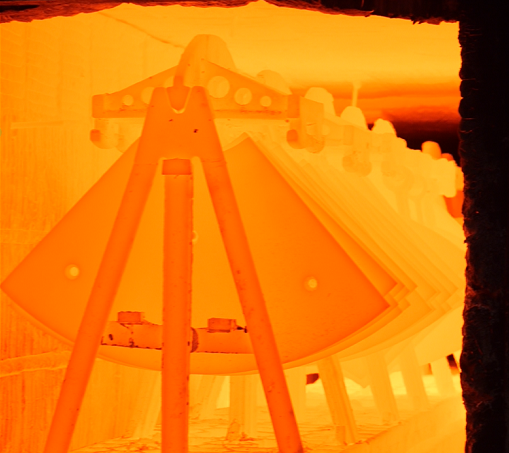
Heat Treatment in Concrete and Asphalt Plant Wear Parts
For concrete batching plants and asphalt mixing plants, wear parts operate under continuous friction from aggregates and cement materials.
Key heat-treated components include:
Mixer liners / Mixing blades / Scraper blades / Asphalt paddles / Side liners
Proper heat treatment ensures these components can withstand long-term abrasive working environments while maintaining dimensional stability.
Quality Control During Heat Treatment
Professional foundries use advanced testing equipment and strict process control during heat treatment.
Important quality control steps include:
Furnace temperature monitoring
Holding time control
Cooling rate management
Hardness testing
Metallographic analysis
Impact testing
Consistent heat treatment processes are essential for ensuring stable product quality across every batch.
Haitian Casting Heat Treatment Advantages
At Haitian Casting, heat treatment is a key part of our manufacturing process for wear-resistant parts.
Our products are widely used in:
Concrete batching plants
Asphalt mixing plants
Mining machinery
Crushing equipment
With advanced heat treatment technology and strict quality standards, we provide wear parts with:
High wear resistance
Excellent toughness
Longer service life
Stable performance
From casting to final heat treatment, every process is carefully controlled to deliver reliable solutions for global customers.
Conclusion
Heat treatment is not simply a manufacturing step — it is one of the most important factors that determines the performance and lifespan of wear-resistant parts.
For construction machinery, mining equipment, and asphalt plant applications, professionally heat-treated wear parts can significantly improve operational efficiency and reduce long-term costs.
Choosing a manufacturer with advanced heat treatment capability is essential for achieving reliable and durable wear solutions.

 Tik Tok


